In case you are doing the MA in Sustainability Science (MASS) of IGNOU, you really cannot miss out IGNOU MASS Project for MSDP 18. It is not one more topic but the project. The final and full 8-credit dissertation that, to be truthful, seems like a challenge and an opportunity. The opportunity to take a break with the modules which were theory-filled and perform.
Technically, though, it is referred to as a capstone project. That is so formal. However, what it actually is, at least practically is – your chance to approach an actual sustainability problem by yourself. It can be the waste management in your city, the solar power on rooftops, or even the policy of water conservation of a certain community and the way a community manages it, that is up to you. Instead, there is space to make a decision about something that matters.
The best thing about MSDP-018 is that it brings everything you have studied together in a form of a practical experience. Yes, it is compulsory. At first glance, that could be intimidating, but most students find this process quite interesting. Perhaps, even satisfying.
🔍 Highlights, Overview, and Quick Summary
- Capstone Experience: MSDP-018: This 8-credit dissertation, which is the requirement to complete the degree, combines the classroom and field research.
- Learn as a Freshman: Learn during 3rd semester or last semester. The approval process of synopsis is 4-6 weeks, which means you have to prepare beforehand to prevent delays.
- Adhere to the Format: Your report should contain a Title page, certificate of originality, chapters (Intro, Methodology, Results, etc.). reference page and annexures in IGNOU Project format.
- The Choice of Topics is Important: Consider such themes of sustainability as renewable sources, resistant to climate or the system of waste. Make it workable and researched.
- Final Submission & Viva: Submit your whole MASS project in a form of a single PDF through online portal in IGNOU or offline. Thereafter, be ready to walk confidently to report your findings in the viva voice.
Learning about IGNOU MASS Project (MSDP 18)
📘 What is MSDP-018, in MASS Programme?
MDSP-018 is the 8-credit project part of IGNOUs MA in Sustainability Science (MASS). It is not an academic prerequisite only, and it is the practical part of your education. The place of theory-action interface.
Whereas you used to read about sustainability, you will now be expected to research this in a real-world setting. This involves coming up with a particular problem such as the utilization of renewable energy in the countryside and plastic waste in the city, getting to know more about it by going in the field or interviewing or gathering the data.
🌱 Why this MSDP 18 Project Matters?
MSDP-018 marks the change where your MASS degree crosses over to become more than academic. It obliges you to take action with what you have learnt- by questioning, gathering facts, and conceptualizing empirical trends.
It is not merely writing about sustainability any more. You are involved in it.
The experiences that you acquaint during your stay here, field research, critical thinking, problem analysis is what sustainability professionals, NGOs, and researchers on the ground actually utilize. Admittedly, this might be scary at the beginning, but we can all emerge at the other end feeling stronger, stronger with the skill and ability to do things. As though they are not merely studying change… but it is participating in it.
⏳When to start MSDP-018
The temptation might tell you to save your IGNOU MASS project till the end. In the practice? Early is the omnibus.
You should start MSDP-018 during Semester 3 where you should have already satisfied most of your core theory papers. This is the time when subjects will start to make sense and you will be more well-informed to select a topic that meets your interest.
🗓️ IGNOU MASS Project Deadlines Approval Timeline
Term-End Exam (TEE) is the schedule through which IGNOU projects are submitted. And here is rule of thumb:
- To take TEE in June: enter by September 30
- December TEE: March 31
Forgotten these deadlines? Your MASS project can be rejected or rolled over, and most cases, IGNOU has deleted unsubmitted drafts- which compels you to re-upload in subsequent cycle.
Synopsis approval is another imperative measure. When forwarded to the Regional Centre or to the School of Studies, IGNOU generally takes 4 to 6 weeks to read and accept the same. Such favor is non-negotiable something you cannot move forward without it.
That is why it is clever to think it backward:
- 🕒 Spend 2 months as fieldwork and writing
- At least 1 month should be added to approve synopsis
Between all the slip-ups to expect (holidays, unresponsive guides, gaining access to data) make sure to build in buffer time into your schedule
✅Speedy Hint
Finally, you should submit synopsis prior to attaining your final-term exams. And as MSDP-018 is more than 4 credits, ensure that you pay the 500-rupee project examination fee, on top of your exam form. You may get delayed in your assessment in case you miss it despite your report being in time.
Guidelines and Format of IGNOU MASS Project
📑 Structure of a Dissertation Report (Cover to Bibliography)
IGNOU does not anticipate an unblemished thesis, but structure is one highly expected thing. Your MASS Project Report (MSDP-018) should have a definite pattern, starting with the title page down to the annexures. This is what you should provide:
- Title Page: Please include the project title, name and enrolment number, program code (MASS/MSDP-018) and date of submission. Simple, professional.
- Certificate of Originality: Required. Signed by yourself and guide. IGNOU gives the model- do not change it.
- Acknowledgments (optional): Short notes that will be used to thank your supervisor, participants or institutions that aided.
- Table of Contents: State all the chapters, tables, figures and annexures with page numbers.
- Introduction (10 marks): Induce about your topic, aims and reasons. Justify the rationale of your research.
- Literature Review (10 marks): Write a summary of the literature concerning relevant research and theories. Indicate what place your work has.
- Methodology (10 marks): Talk about how you conducted the research, about data sources, data collection tools (surveys, interviews, etc.) and data analysis.
- Results & Discussion (30 marks): Provide the results in the form of a table or a chart. Interpret trends. Where possible, contrast with previous researches.
- Drawing conclusions & Recommendations (10 marks): Point out main observations. Find out whether goals were realized. Make recommendations on further work.
- Limitations & Scope: List the limitations– data, time, or external constraints.
- References/Bibliography: Reference all the materials used in a consistent manner. APA is often the preferred one.
- Annexures: Raw data, tools, photos, or any other adequate material. Label (e.g. Annexure I: Survey Form).
Note: The assessment plan of IGNOU goes in line with these sections. After this outline your report will be easy to review and more importantly grade.
For detailed knowledge on guidelines, refer to IGNOU Project Guidelines.
📄 Page Count & Formatting Instructions
On the one hand, IGNOU does not impose strict requirements on the paper length, but generally, the following is expected:
- 📄 Page Limits: 40-60 pages of the content written to be typed on a double-spaced paper (without annexures), approximately 10-15 000 words. Detailed work is all right to 18,000.
- 🔆 Font: Arial, Times New Roman 12. Apply one uniform font.
- 📏 Spacing: line-spaced-doubled throughout.
- Margin: 1inch (2.5 cm) all round.
- Page Numbers: Begins at the first page (not the title page). Locate top-right, or bottom-center.
- 📘 Binding (off-line): Spiral or hard-bound and black or blue.
- Figures & Tables: be clear in labelling (e.g. Figure 1: Rainwater Usage Trends). Insert in between the relevant.
🧩 Short Advice regarding MASS Project Submission
- ✔️ IGNOU official cover page arrangement (refer to check Downloads on the site).
- ✔️ Final check: cover page -> certificate -> contents -> chapters -> annexures.
- ✔️ Back up- both soft and hard copies. Destroying PDFs and file loss happens more than you can imagine.
- ✔️ Preview a test print when making an off-line submission: layout, readability and pagination.
Choosing Your IGNOU MASS Project Topic (MSDP-18)
It is not worth rushing to choose a topic of the project, though people rush. On the one hand, anything connected to sustainability may work in the very beginning; however, it is not quite accurate. These are of course topics in which you are truly interested and can realistically finish within the time available to you.
🔟 10 Good Sample Topics for MSDP 18
In case you are not sure what to start with, these examples may lead you to narrow down on what to do:
- Solar Energy in Rural [State] – Is the small village going to use solar? And why/ why not?
- Working of the plastic ban in [City] What has happened on the ground?
- Urban Slums and Homewaves: What are the communities doing in the face of warming?
- Organic Farming? A true volume and health difference in the soil?
- Community Forests Are they really preserving diversity?
- School Sustainability Awareness Where are the students and where are they not?
- Air Pollution Policy Review-Is the state policy getting any measurable?
- RAINWATER HARVESTING IN [REGION] -Is it raising the groundwater level?
- Activating Local Wastewater Systems: Is it good enough?
- CSR and the Environment CSR and the Environment: Do Companies Really Have an Influence or Is It PR?
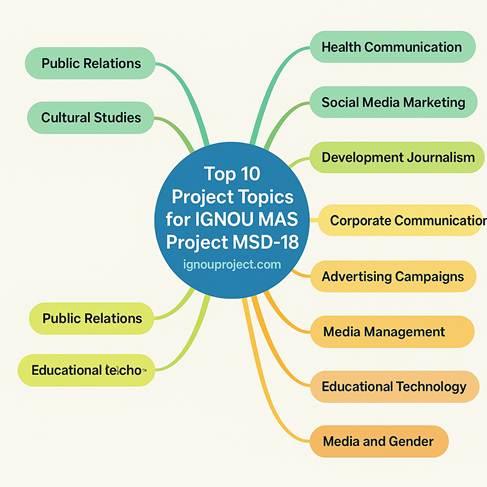
Figure 1: “Top 10 Project Topics for IGNOU MASS Project MSDP-18”
Each of the topics connects with fundamental sustainability themes and can be modified, depending on where you are or what interests you.
✍️Writing your IGNOU MASS Project Synopsis
📝 What to Include into the MSDP 18 Synopsis
Your MASS Project Synopsis is really a blueprint a concise plan telling what your project is all about how you are going to do your project and the reason why you should. IGNOU usually prefers it in a range of 8-12 pages printed on A4 pages put on a spacing of 2 lines each and the format professionally organized.
The following is what your MSDP-18 synopsis must contain:
- Title: Specific, precise, and relevant to your subject (do not use vague text).
- Introduction / Background: Summarily put a case of the issue. Describe the context of sustainability and the reasoning of the research topic selection.
- Objectives: Establish 24 objectives specific to researching. Specifically, what are you looking up or checking?
- Problem Statement: Make the main research question clear or the issue that your research will answer.
- Research Methodology:
- Study Area / Locale: Describe where you will be doing your study.
- Sample Size / Respondents: Who are you going to study? How many?
- Methods of data collection: Surveys, interviews, observations, case studies, select what is appropriate to your topic.
- Tools and instruments: when you use questionnaires, scales, or software (such as Excel/SPSS), state them.
- Analysis Plan: Closely mention how you would use the data-qualitative coding, percent work, statistic tests and the like.
- Expected Results: What are you expecting as the result? Provide an overview of potential insights, effects, or uses of your results.
- Timeframe / Work Plan: Give an approximate timeline- when will you gather data, analyze it, write it and submit the same?
- References: List the most important books, articles or reports you have consulted in order to develop your topic or approach.
- Declaration / Cover Page: In the format of IGNOU, see RC or study centre.
Hint: A simple font (such as Times New Roman, 12 pt), sub-topics and ensuring that all the sections make sense. No filler or highly technical language should be used as clarity counts more than complexity.
📌 For a visual guide and templates, refer to:
👉 How to write IGNOU Synopsis/Proposal?
✅ Guidance on Approval Process and Submission in MSDP-18
No special requirements in the same respect as approval process and submission and when your synopsis is prepared, here is what to do next:
- The addressing should be done to Regional Centre (RC) or the School of Studies of Delhi.
- IGNOU can be submitted by email, which takes the longest and it can be by Speed post or by visit to RC-depending upon the existing process of your RC.
Accompany your MASS synopsis with the following:
- Filled-in Proforma (Appendix II)
- A letter of consent by the supervisor
- Bio-data of Guide (a brief academic CV)
- Originality/Declaration Certificate (where needed by RC)
All forms have to be signed by you and your guide.
Approval time: Usually 4–6 weeks. In the event that it is accepted then IGNOU will remit a signed proforma. Make sure you store it away safely as you will be required to append it with your final report.
Do not panic, in the event that your synopsis is rejected or sent back with recommendations. Check out the comments, correct and re-submit in the next turn. The most typical reasons of rejection are:
- Too broad or general a topic
- Poor research design
- Absence of feasibility in the field
- Lost records
Always mention IGNOU prescribed forms, we get these forms at IGNOU official site or in your Study Centre. Third party templates must be avoided unless checked.
👨🏫 Selection of IGNOU MASS Project Guide Supervisor
✅MASS Project Guide Eligibility Criteria
Your project guide is not there to be treated as a mere formality; they are an important aspect of your MSDP-018 experience. IGNOU is quite rigid on who is to supervise your dissertation. Here are the eligible people:
- Faculty IGNOU Current faculties of IGNOU School of Interdisciplinary & Transdisciplinary Studies.
- Academic Counsellors- Registered MASS IGNOU counsellor or PG Diploma counsellor-related program.
- Faculty of University or NGOs – Teachers or researchers in universities or NGOs studying in the field of sustainability or related fields.
- The holders of Ph.D. – People who have a doctorate in Environmental Science, Ecology, Sociology, Economics, Anthropology, etc.
- Master or M.Phil degree holders- those would have at least 2 years of relating teaching or research experience at sustainability areas.
Concisely, your guide should be of quality intellectually and topical. This is always the best thing to do since, in case IGNOU feels that your guide is not up-to-par, they will request you to get another one.
📝 Obtaining Approval of MASS Project Supervisors
Start early. After finding a potential supervisor, present to them your idea of a topic and seek their approval to mentor you. Formal approval must be obtained in IGNOU and it includes:
- Signed Guide Proforma (Appendix-II)
- Guide Bio-data (CV) -Qualifications, institutional affiliation, area of expertise offers
- Originality Certificate -You and your guide have to sign the certificate
These are the documents to be attached together when making your synopsis submission. Store a copy of mails or messages or letters in case IGNOU at a later point of time wants to have a record of the communication.
After the synopsis arrives at the Regional Centre or School of Studies, it is reviewed on the feasibility of the topic being prepared as well as the eligibility of the guide. In case of no conflicting findings, it is approved. Otherwise, you will have to make adjustments either to the topic, or to the guide, or to both.
Pro Tip: Select a person that is knowledgeable regarding the area of research that you are doing and should have time to provide occasional feedback. The process of the project could be easier and more pleasant with an intelligent and proactive guide.
🖋️Writing your IGNOU MASS Project Dissertation Report
📚 Chapter by Chapter Details (Introduction, Methodology, Results of Data Analysis…)
IGNOU requires thoroughly prepared, and chapter-based dissertation on the program named MSDP-018 with associated evaluation pattern. This is the way you should structure your report:
Summary (Optional wise recommended)
Write this last. Make it short (~150-250 words). Add the issue, aims, steps, essential findings, and your key conclusion. No fluff.
Introduction (Chapter 1)
Prepare the tickets. Explain background, rationale, objectives of the research, questions and field of research. Refer to any hypotheses.
Literature Review (Chapter 2)
Comment on theories, prior studies and case studies. Demonstrate what to think that should be and what your research can or will do to fill that gap.
Research Methodology (Chapter 3)
Describe your research design:
- Research area or subject base
- Sample size and sampling method
- Data collection instrument (e.g. survey, interviews)
- An analysis scheme (e.g. descriptive statistics, coding)
- Computer software / tools (excel, SPSS, etc)
Data Analysis and Results (Chapter 4)
Describe your results. Provide charts or tables and state their meaning. Trace each finding to your goals.
Discussion (Chapter 5)
Analyse your findings. Compare to other researches. Talk patterns, surprises or contradictions. Consider limitation of data.
Conclusions
Pay an overview of what you discovered. Did your aims and goals work? Make a reference to the contribution of your study to the sustainability science.
Future work / Recommendations
Recommend how the findings may be used/enhanced. Make suggestions on future research.
Limitations
Be honest. Write about sample size concerns, data coping restrictions, or time limits that are potential to influence interpretation.
References /Bibliography
Affirm all sources in one particular fashion (APA or Harvard). All the in-text citations should be listed here.
Appendices / Annexures
Add tools, raw data, transcript, photos etc. Label them properly (e.g. Annexure I: Survey Questionnaire). There is no use mentioning annexures half way through the text as afterthoughts.
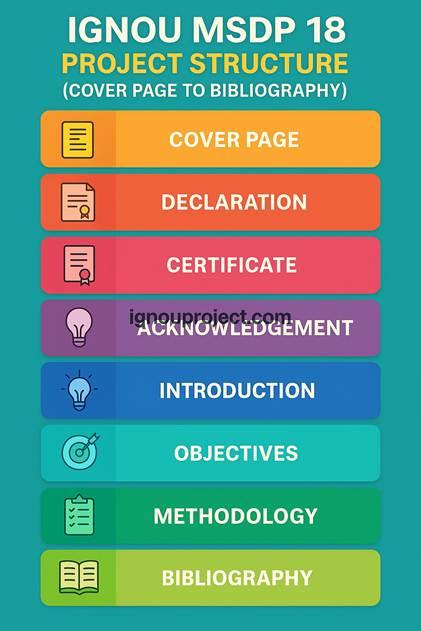
Figure 2: “IGNOU MSDP 18 Project Structure (Cover Page to Bibliography)”
✏️Written in a Short Time (Abstract, Bibliography, Annexures)
- Abstract: Make it clean, non-jargony and informative.
- Bibliography: A conventional style is one to be used. Things such as Zotero or Mendeley may be useful time savers you will still need to proofread. With websites indicate complete web address and date of access.
- Annexures: Entail what is really necessary. The MASS project report must not be burdened with bare data. Make the body readable.
🚫 The Common Errors to Prevent
- Plagiarism: Paraphrase and cite at all times. IGNOU demands the originality certificate to be signed.
- Formatting: Using the wrong font, spacing or a lack of a cover page = trouble. Use the template of IGNOU.
- Missing Sections: No conclusion? No references? That is a sure shot to lose marks. Application of Checklist.
- Late submission: Submit it late, you blow the term. There is always the need to have buffer time- particularly in instances where there are printing or digital an upload that goes wrong.
- Ineffective Data Interpretation: You do not want to dump stats. Interpret the meaning of each of the numbers.
- Grammar Problems: Mistakes or wrong wordings make your report sound poor. Revise/get a person to revise or read it.
Pro Tip: IGNOU gives much weightage to Results & Discussion (30 marks), so, when writing it, you cannot be stingy. Take each part seriously as though it is important- because it is.
📤 Submission process of IGNOU MASS Project (MSDP-018)
✅ 1. Through IGNOU Project Portal on Online submission
Most projects are now to be submitted digitally including MSDP-018, which IGNOU now favors. In case of the portal being accessible (usually onlineproject.ignou.ac.in) what to do is:
📄 Combine your final project as one PDF.
This includes:
- Title page which contains your name, enrolment number, programme code (MASS), course code (MSDP-018), Regional Centre code, mobile number and email.
- Originality certificate signed
- Letter of approval of synopsis
- Whole dissertation (in proper sequence)
Be sure:
- Uploaded pages are not blurry (uploaded)
- pages are not dishevelled
- File size is within the limit of portal
💾 Save the registration number or submit the confirmation receipt. It is your upload confirmation.
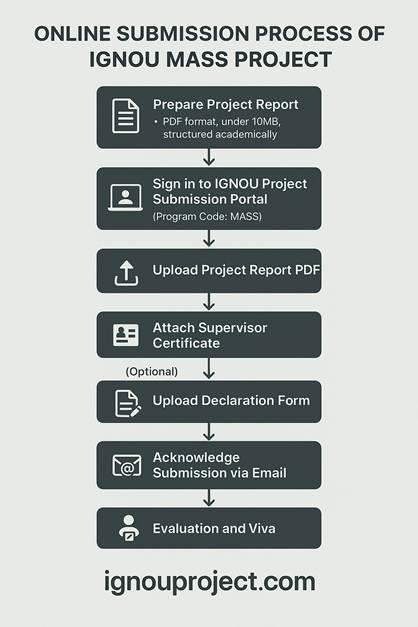
Figure 3: “Online Submission Process of IGNOU MASS Project”
📧 2. Email Submission (When portal is not in use)
In case, the portal is not available then IGNOU can submit through email.
- Upload your entire project file as a PDF on programme coordinator (School of Studies) or the email of the regional centre (RC).
- Do not forget to CC your RC and save the email with time stamp.
- Your name, enrollment number and course code (MSDP-018) should be entered in the subject line.
Note: In other courses, IGNOU sent specific emails (e.g. pgdss@ignou.ac.in). In the case of MASS, send it only after confirmation with your RC.
🗂️ 3. Study Centre or RC Offline Submission
In the case that the digital methods are unavailable, submission can be made offline.
📘 Bind your MASS project (spiral or hard bound) Include:
- Title page
- Originality certificate
- Sanctioned summary
- Proforma and bio-data of guide
Send one or the other:
- At the Study centre, who will send it to the Registrar (SED), IGNOU HQ, New Delhi
- Or simply at your Project Cell at your Regional Centre
Try to add a brief cover letter with your name, enrollment, program (MASS), course (MSDP-018) and contact information.
Other Tips
- When you are registering the exams, pay the project evaluation fee (₹500 for 8-credit courses).
- Retain the receipts, mails and proofs of submission.
- Late, incomplete, or ambiguous projects are not going to be accepted at IGNOU; thus do a final check-up before submission.
🎤 IGNOU MASS Project Viva Voce (MSDP-018)
The viva voice is the last MASS project process you will be undergoing and this is not just a limousine exercise. Now it is your opportunity to discuss your work, justify your decisions and demonstrate the examiner that you actually know what you have done.
🔍 Sample Questions that You may be Asked in MSDP-18
Viva questions will be more based on what you know and can do. The following questions should be expected:
- What was the reason of your selection of this topic and place?
- What were your research purposes?
- How did you gather your data- and why were a particular method used?
- Is it possible to describe this chart/table?
- What do you find as your major findings and what do they mean to sustainability?
- What were the constraints that you encountered in your project?
- What are your suggestions as to proceed or research in the future?
Tip: the clearer you can align each part of your report- objectives, methodology, outcomes, etc.- the smoother will go your viva.
📥 Downloadable Resources
As a guide, have the following at hand (or seek at the study centre):
- ✅ IGNOU MASS Project Synopsis Sample (PDF)
- ✅ MSDP-018 Project Report Sample (PDF)
- ✅ Top MSDP-018 Topic Ideas (PDF)
❓Frequently Asked Questions – IGNOU MASS Project (MSDP-018)
What is the MSDP-018 of IGNOU MASS Programme?
Project course MSDP-018 is compulsory at IGNOU as part of MA in Sustainability Science (MASS). It is an 8-credit masterpiece set of dissertations where learners make original research on a topic concerning sustainability purposes, usually it entails fieldwork, research and analysis activities. This project is what it will take to complete your degree in MASS.
When and how do I begin my MASS project?
An earlier starting time for project planning is ideally at the end of Semester 3 when most theory papers are completed. Choose an attainable topic and develop your project synopsis. The same should be submitted at least 4 6 weeks prior to your research, so that, enough time may be given to the IGNOU to approve it. Preparation will mean you will make your submission in time, generally March in the case of December TEE, September in the case of June TEE.
What are effective project ideas of MSDP-018?
The powerful topics afar correspond with central themes of sustainability. Consider:
- Rural use of solar power
- Urban poor plastic waste management
- Effect of organic farming in the health of soil
- Water conservation via the community
- Statewide analysis of the air pollution policy
Select something that is local, searchable, and something that matters to you- that way you will feel motivated and make the project more significant.
What is the MSDP-018 marking criteria?
The marking of the project is a maximum of 100 marks which are allocated as follows:
- Introduction/Objectives -10 marks
- Literature Review -10 marks
- Methodology- 10 marks
- Results and discussion (30 marks)
- Conclusions – 10 marks
- Viva Voce- 25 marks
Pay extra attention to your analyses and interpretations of data- that is the most important.
✅The Final Words: Positioning Yourself to Succeed in MSDP-018
Your chance to implement the sustainability theory in practice is the IGNOU MASS Project (MSDP-018). It is not only the requirement but a platform to learn about some issues you are passionate about, to grow the research skills, and become a sustainability professional.
However, it is planned. Begin doing it early, select a topic you really will like to research, and involve supervisor at the early stages. Comply with the official format, do not forget about deadlines, and support each step with documentation.
And when it comes to the viva, then just trust your process. The work has been completed and now it is about delivery of information acquired.
Bear in mind:Treat this checklist like a roadmap. Whether it is brainstorming, or filling out topic ideas or even preparing your annexures, it is made to keep you on track. Through the right emphasis and guidance, MSDP-018 should not just be a tick-a-box exercise: it should be a fulfilling end point to your quest to complete a course with IGNOU MASS Project.
All the best! 🌱
🧾 In Need of Readymade Services or Professional Advice?
Give us a call or write to us about 100% Accepted IGNOU MASS Project Reports, Customized Topics, and Synopsis Clearance in a short time!
WhatsApp Support