
The IGNOU PGDUPDL Project for MEDSP 45 is a valuable and enriching experience to delve into the nitty-gritty of city planning and development. This is your chance to convert theoretical knowledge into practical solutions of actual urban issues, contributing to the debate on sustainable cities and improved living in the city.
This guidebook will walk you through the process of learning how to start with the topic choice, how to find an approved supervisor, and how to proceed with IGNOU’s PGDUPDL project guidelines. It offers instructions on the MEDSP-045 project synopsis and final report preparation (format requirements) and the submission and assessment plan.
Key Highlights & Quick Overview
- 📌 MEDSP-045 Project Work is a 6-credit core of IGNOU’s PG Diploma in Urban Planning and Development (PGDUPDL), where emphasis is laid on practical urban problems through case study or survey approach.
- •✅ Simple Steps: Choose a relevant topic, choose a qualifying supervisor, and prepare and submit your project synopsis (proposal) and final report in IGNOU’s PGDUPDL recommended format.
- 🕒 Important Dates: Submit your synopsis on April 30 (January session), or October 31 (July session). Final report can be submitted at your convenience. Results are concurrent with the June or December examination schedule.
- 👥Supervisor Approval: Make sure your supervisor fulfills IGNOU’s requirements and include his/her signed biodata along with your proposal for official sanction.
- 📝Proper Formatting: The synopsis must include Title, Objectives, Problem Statement, Methodology, Limitations, and References. The report (around 40–50 pages, ~10,000 words) must be according to IGNOU’s format and binding regulations.
- 🎓Examination: Only the written report is examined—no viva voce. Marking: Introduction/Objectives (15%), Literature Review (15%), Methodology (20%), Results/Discussion (40%), Conclusion (10%). Passmark 40%.
Introduction to IGNOU PGDUPDL Project (MEDSP 045)
Overview of the MEDSP 45 Project Course
MEDSP-045 Project Work is the last project of IGNOU’s Post Graduate Diploma in Urban Planning and Development (PGDUPDL). It carries 6 credits and enables you to “improve your capacity to apply learning by choosing a topic, preparing a project proposal, designing data collection instruments, collecting data, and preparing information for a report”. Briefly put, it is an exercise of “learning by doing” in which you apply classroom learning to an urban planning issue in the real world, using either a case study method or a survey method. For example, you can study the public transport of a city (case study) or study urban sanitation (survey method). This practical project is a complement to your theoretical courses (MEDS-041 to MEDS-044) and hones practical research and analytical skills.
Relevance of MEDSP 45 Project Work to Urban Planning and Development
The MEDSP-045 project is an integral component of the PGDUPDL program, where theory meets practice. Through independent research of urban development issues, students acquire practical skills in data retrieval, research design, and field analysis. Knowledge and practical skills are supplemented through analysis of actual urban issues by case study or survey method. Successful completion of this in-depth project (approximately 40–50 pages or 10,000 words) improves your research and reporting skill as well as demonstrates your ability to tackle actual urban planning issues—a feather in the cap for subsequent job or higher studies in the subject.
IGNOU PGDUPDL Project Guidelines & Eligibility
How to start IGNOU PGDUPDL Project Work?
Begin by selecting a research guide and appropriate supervisor. Ensure the supervisors’ eligibility and interview potential guides beforehand. Having selected your guide and topic, obtain the official Project Proposal Proforma (Annexure II) from IGNOU’s PGDUPDL study material. Prepare a project synopsis, including the title, introduction, objectives, problem statement, and methodology. Have the synopsis and proposal signed and attested by your supervisor. Lastly, submit the signed proposal form, the synopsis copy, and the supervisor’s biodata in detail to:
The Coordinator (PGDUPDL),
School of Extension and Development Studies, IGNOU,
Maidan Garhi, New Delhi – 110068.
Ensure you write “MEDSP-045 Project Proposal” on the envelope so it doesn’t get mixed up. Keep a copy of everything with you. Follow-up of this process (project proposal submission) is required for formal approval.
When do you start the IGNOU PGDUPDL Project Work?
The PGDUPDL project is generally completed in the second semester of your diploma (once you have cleared most of the theory papers, especially MEDS-044 on Monitoring & Evaluation). Begin early – ideally in your second semester – so that you’ve got enough time for research and writing. IGNOU has brought in deadline timetables as per admissions to keep you on track: if you had taken admission in the January session, submit your project proposal (synopsis) by April 30 of the same year; for an admission in the July session, October 31 is the deadline. It is strongly advised that you follow these deadlines for timely approval and submission. (If you miss the session deadline, you may submit a proposal in the second half of the year as well, but make arrangements accordingly to finish within your study period.)
Briefly, start your project after choosing topics and attempt to submit the synopsis during the first year. Once approved, conduct your fieldwork/data collection and then draft the report – all within your maximum allowed program duration (PGDUPDL allows for 36 months).
Project Aims and Eligibility
Major objective of MEDSP-045 project is to gain research skills and practical competences in urban planning. After completing this project successfully, you will be able to:
- Case study versus survey research methods: Define and compare.
- Choose a specific issue of urban development and create a concise project proposal.
- Develop data tools (interview schedules, survey questionnaires) and collect/analyze data with maximum efficiency.
- Develop a professional project report with authentic findings and conclusions.
According to the MEDSP-045 guide, in closing the project, you “should be able to define and discuss the concepts of case study and survey methods”, and to “identify a topic, formulate a project proposal, prepare tools, collect and analyze the data, [and] write the project report and submit it for evaluation”.
Eligibility: Candidates studying the PGDUPDL course are eligible to study MEDSP-045. To study PGDUPDL, IGNOU requires a Bachelor’s degree in any field. No other experience or age requirement. So essentially, any PGDUPDL student who has cleared the theory papers can enroll for the project. (Also remember that IGNOU expects you to score a minimum of 40% marks in this project to be eligible for the diploma.)
Official IGNOU Project Handbook Overview
IGNOU provides an official Project Work Handbook for MEDSP-045 (PGDUPDL) that was revised in 2017. The handbook contains specific guidelines on selecting your project methodology (case study or survey), structuring the synopsis and report, tips for data collection, and assessment processes. It describes how to plan the project proposal, conduct the study, and represent the report. For example, it explicitly states that the project is intended to “be a new experience and meant to assist you in learning by doing”, and outlines each step from proposal to submission. You will be required to consult this handbook (available on IGNOU’s eGyankosh portal) for all project advice.
Read: IGNOU Project Guidelines for better understanding.
Project Timelines and Credits
The PGDUPDL is a one-year duration diploma (minimum 12 months) with the option to extend up to 36 months. Out of the total programme credits, 6 credits are for MEDSP-045. In practice, you finish up all the theory courses (MEDS-041 to MEDS-044 and electives) in the first year, and spend the remaining time on the project. Because of the urgent deadlines (Apr/Oct for proposals), it is advisable to finish your project work within your time. Remember that you submit the project report only once – use your time for research and writing to the best possible extent.
How to Select a Suitable PGDUPDL Project Topic
Criteria for Choosing a Suitable Topic
Select a topic that is closely linked to urban development and planning that is of real interest to you. Make use of current trends, local issues, or upcoming trends. Select a topic that is:
- Applicable: In relation to city planning, infrastructure, municipal services, housing, or environment.
- Specific: Niche enough to be closely scrutinized (e.g., “Impact of metro rail on daily commutes in [City Name]”).
- Practical: Inexpensive for data gathering in your timeframe; use a case study if surveys are not feasible.
- Original: Introduces new material or resolves a particular issue.
- Engaging: Related to your interest or experience for greater motivation.
Prior to finalizing, discuss your idea with a mentor so that it is comprehensible, feasible, and can yield actionable takeaways.
Sample Project Titles for PGDUPDL
IGNOU’s Project Handbook (Annexure I) gives a few sample topics to get ideas going. Some of them are:
- Public Transportation System Assessment: Case study of metro, bus or suburban train in a city.
- Pollution Surveys: Environmental or city water/air pollution level within a town.
- Master Plan Case Study: Case study of Master Plan implementation in a city/town.
- Real Estate Dynamics: Real estate development survey, or impact of metro projects on property values.
- Service Satisfaction: Satisfaction of citizens with municipal services (housing, sanitation, education, banking, etc.).
- Case Studies of Local Governments: e.g. case study of an urban municipality, school, anganwadi centre or NGO in a city.
- Social Programmes: Examine schemes such as urban renewal missions (JnNURM projects) or midday meal in municipal schools.
- Social Issues: Women’s/children’s health condition in slums, causes of urban migration, limitations of waste management, etc.
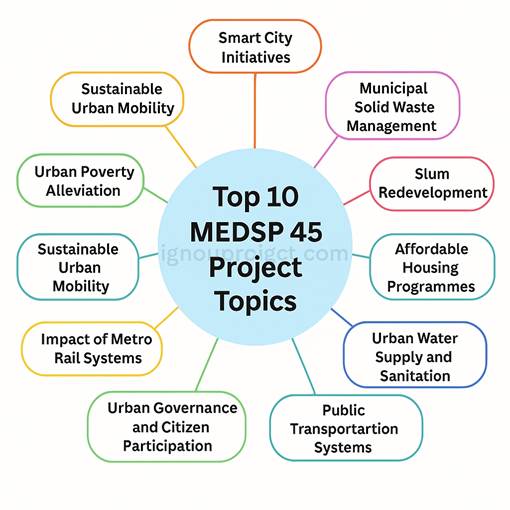
Figure 1: “Top 10 IGNOU MEDSP 45 Project Topics”
Some other contemporary issues (not covered in the handbook) could be smart city master plans, waste management, urban green space impacts, affordable housing plans, flood protection, etc. (these are common urban planning issues). Select a topic such that it is feasible to gather data (interviews/surveys) and the topic size is manageable for the 1-2 month data collection duration. Always check if your topic has adequate sources or previous research to prepare a literature review.
How to get the MEDSP 45 Project Topic Approved?
After selecting a topic, prepare the synopsis of the project proposal in the suggested format (below section). Official clearance should be obtained before conducting full research. The procedure is:
- Choose a Supervisor: Choose a qualified guide, get their consent, and get their signature on the proposal form.
- Send Your Proposal: Mail the signed proforma, synopsis copy, and your supervisor’s biodata to the IGNOU Coordinator (PGDUPDL, SOEDS, Delhi). Mail the envelope as “MEDSP-045.”
- Await Approval: IGNOU responds in 6 weeks. If changes are required, make changes and resubmit your proposal as instructed until approved.
- Start Your Project: Hold off on report writing and data gathering until you receive official sanction.
Tip: Pre-order to prevent delays—pre-ordering prior to term-end exam deadlines guarantees timely approval and delivery.
Getting Started with IGNOU PGDUPDL Project Synopsis
IGNOU PGDUPDL Project Synopsis: Overall Framework
Your research project synopsis is a well-written, engaging research proposal—typically 10–15 double-spaced pages. Major elements include:
- Title: Choose a creative, relevant project title.
- Introduction: Briefly introduce your topic, its history, and significance in urban planning.
- Objectives: Clearly state the specific aims or research questions that your project answers.
- Problem Statement: Describe the particular problem or knowledge gap your research will solve and why it matters.
- Literature Review (optional): Only summarize significant current studies if necessary.
- Study Methodology: Describe your method—case study or survey—with study area, sample size, data collection instrument, and analysis technique.
- Scope and Limitations: Define boundaries and any limitations of your study.
- Expected Output: Specify the expected output, i.e., results, tables, or charts.
- References: Cite major sources in APA or any style of choice.
Tip: Attach the official Proforma (Annexure II) and signed biodata of your supervisor with your synopsis for approval.
📌 For a visual guide and templates, refer to:
👉 How to write IGNOU Synopsis/Proposal?
Mistakes to be Avoided in your PGDUPDL Synopsis
- Too Broad Subjects: Select a focused topic that can be handled in one project.
- Ambiguous Goals: Set goals that are specific and not vague.
- Ignores Format: Adhere to the suggested format—do not omit necessary sections.
- Missing Signatures: Always put your supervisor’s signature and complete biodata.
- Multiple or Late Submissions: Submit one copy on time; keep a copy with you.
- Mislabelling: Accurately label the envelope as “MEDSP-045 Project Proposal.”
- Unclear or Plagiarized Content: Utilize clear, original content—never plagiarize.
Tip: Double-proof each point prior to submission to allow for quick and seamless approval.
Where to Send the PGDUPDL Synopsis
Send the synopsis package (Proposal Proforma + signed synopsis + supervisor biodata to: PGDUPDL Coordinator, School of Extension and Development Studies, IGNOU, Maidan Garhi, New Delhi – 110068.
Post by speed or registered post. Clearly stamp “MEDSP-045” on the envelope, as indicated. Keep your own copy of synopsis and documents. Post and subsequently await notification of approval from the university (typically by post and e-mail within ~6 weeks).
Role and Appointment of IGNOU PGDUPDL Project Guide Supervisor
Eligibility Standards for IGNOU PGDUPDL Project Guide Supervisor
Your project guide will supervise your work. IGNOU has prescribed guidelines for who is eligible to be a supervisor. The supervisors may be:
- IGNOU Faculty: IGNOU teachers or faculty of the School of Extension and Development Studies (SOEDS).
- Academic Counsellors: IGNOU trained counsellors with PGDUPDL or other equivalent programmes (e.g., PG Dip/MA in Extension & Development Studies), as per appropriate experience.
- Urban Planning Specialists: University lecturers or researchers in urban development, urban planning, sociology, or other related disciplines.
- Scholars: PhD in Urban Development, Development Studies, Economics, Sociology, Public Administration, Political Science, Extension Education, or any other related discipline.
- Senior Masters: Master’s or M.Phil postgraduates in the relevant fields with at least 2 years of experience (teaching/research/practice).
In brief, your guide should be well qualified academically or professionally in town planning/development. (Note: IGNOU provides supervisors with a token honorarium – Rs.300 per student at the moment, though you should never choose a guide on the basis of pay.)
Supervisor Approval Process in MEDSP-045
After you choose a prospective supervisor (guide), you have to obtain formal permission from IGNOU prior to proceeding with the project. The procedure is:
- Discuss & Confirm: Convey your project idea to a potential supervisor and get their agreement to supervise you. They must sign the proposal form.
- Submit Documents: Include the supervisor’s biodata (qualifications, designation, contact number, and IGNOU assignments) and your synopsis and proposal.
- Wait for Review: IGNOU will take into consideration your supervisor’s eligibility. Otherwise, you will be asked to select an alternate guide and resubmit.
- Change or Approval: In case of a change, resubmit the changed proposal signed by the new supervisor. Each modification is assigned a new approval number.
- Start Project: Proceed with data collection and report writing only upon receiving formal sanction from IGNOU.
Note: To alter your supervisor upon approval, you need to obtain permission from the Regional Centre and undergo the approval process again. Keep clear communication at all steps.
How to Prepare the Final PGDUPDL Project Report
Report Structure (Chapters & Organization)
The final project report is a concluding report that puts together your overall study. Use this template chapter-wise format:
- Title Page: Your study centre, your details, year, title of project
- Certificate of Originality: signed declaration (Annexure-III).
- Acknowledgements: (Optional)
- Table of Contents: Chapters and page numbers
- Chapters:
- Introduction: Context, objectives, rationale
- Literature Review: Pertinent research and theory
- Methodology: Study design, sample, instruments, data collection, and analysis
- Discussion of Results: Results, tables/graphs, interpretation
- Conclusions: Principal findings, answers to objectives
- Limitations: Any study limitations
- Recommendations: Recommendations based on findings
- References: All sources (APA style, alphabetical)
- Appendices: Other materials (e.g., example questionnaires, maps)
Referencing & Plagiarism Guidelines
- Sources to Cite: Always cite in-text and give a full reference for paraphrased and quoted sources. Use a consistent style—APA is recommended. Give all references alphabetically at the end.
- Certificate of Originality: Include a signed Certificate of Originality (Annexure-III) of you and your supervisor to validate the work is original and not submitted elsewhere.
- Don’t Plagiarize: Refrain from copy-paste. Rephrase it in your own words and give due credit to all sources in order to avoid rejection.
Language & Formatting, Word Count
- Length: 40–50 double-spaced pages approximately 10,000 words, with 10% tolerance.
- Language: Use English (or Hindi, if allowed).
- Formatting: 1.5 line spacing A4 paper, Times New Roman 12 pt, print in black, page numbers, hard binding.
- Binding & Submission: Mark the envelope clearly “PROJECT REPORT – PGDUPDL”. Keep a backup, as reports are not given back.
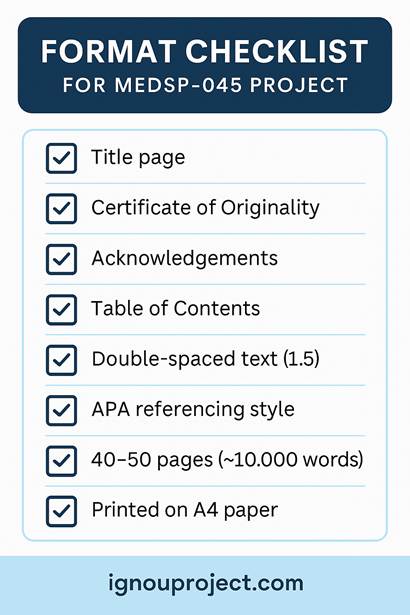
Figure 2: “Format checklist for MEDSP-045 Project Report“
Tip: Follow these guidelines to ensure your report is satisfactory to IGNOU and you pass the evaluation.
PGDUPDL Project Submissions and Evaluation Procedure
Submission Mode (Offline/Online)
The MEDSP-045 project report is submitted offline. You have to submit one typed original copy of your terminal report by Registered/Speed Post to:
Registrar (Student Evaluation Division), IGNOU, Maidan Garhi, New Delhi – 110068.
When submitted, IGNOU provides a Project Registration Number (PR No.) to your report. Quote this PR No. in any subsequent communications. (There is no facility at present to submit project reports through the online mode; always use the postal service.) On dispatch, you may inform the SED by e-mail to acknowledge receipt.
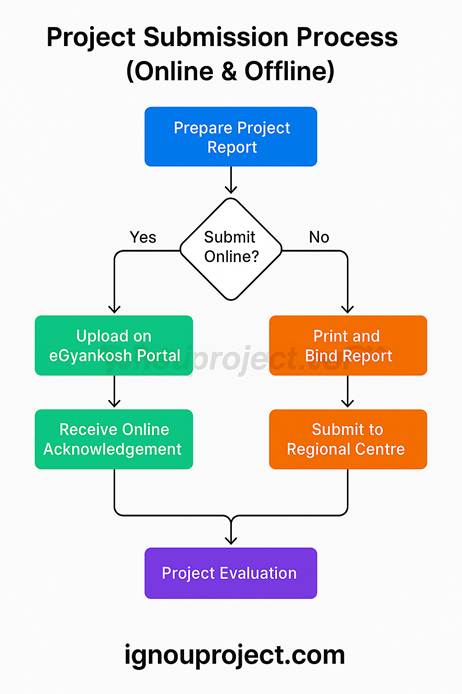
Figure 3: “Project Submission Process (Online & Offline)”
Due Date for MEDSP 45 Project
There is no fixed one-time report submission deadline (unlike term-end examinations). You may submit the report at any time during your study period. However, IGNOU results are declared twice a year:
- If you submit the report between 1 December and 31 May, your result will be declared with the June Term-End exams.
- If you are applying between 1 June and 30 November, the outcome is with the December Term-End examinations.
For example, if your target is June completion, submit by May 31. As much as you can submit at any time (even just after approval), it is preferable to finish writing and data analysis well ahead of the final term. Submit at least one month ahead of exams to allow the results to be processed in good time. In short, space your activities in such a way that proposal approval, data collection, and writing are completed before your intended completion date.
Note: Informal suggestion from a few sources is to follow some “session-wise” schedules (e.g., November 30 final report for Jan entrants, or May 30 for July entrants). Although IGNOU’s official handbook does not refer to those, sticking to such a schedule might keep you ahead of official cut-offs and avoid last-minute troubles.
Viva-Voce Guidelines & Marking Scheme in PGDUPDL Project
Viva-Voce: No viva-voce examination for MEDSP-045. Your project is graded solely on the written report. (This is different from some programs where there is an oral defense.) So, concentrate on producing a clear, well-argued report instead of an oral.
Assessment Scheme: IGNOU evaluates your report against an external examiner based on the official rubric. The marks are awarded as follows:
- Introduction & Objectives (15 marks): Objectives: clear, purpose of study.
- Literature Review (15 marks): In response to relevant earlier studies.
- Methodology (20 marks): Appropriateness of the research method, data collection and analysis processes.
- Results & Discussion (40 marks): Level of presentation of data (tables/graphs) and analysis/interpretation.
- Conclusions (10 marks): Logical conclusions drawn from findings.
There are 100 marks in total. You must have at least 40 marks (40%) to qualify in the project part. If you get below 40, the project has failed, and you would have to revise/resubmit the project report. (The exam department will provide you with one resubmission chance in case of failure, but it is better not to come to that by doing good work.)
📥Key Resources for PGDUPDL Project Success
- 📥Official IGNOU eGyankosh Material: Obtain the official course material and project handbooks for PGDUPDL from IGNOU’s online eGyankosh library. The documents in focus are the Program Guide for PGDUPDL and the MEDSP-045 Project Handbook.
- 📥MEDSP-045 Synopsis Sample (PDF): Search for sample synopsis templates online or in IGNOU student forums. A good example can show you how to structure objectives and methodology sections.
- 📥Sample PGDUPDL Project Report (PDF): Read a sample project report (if any) to see chapter flow and presentation. Urban planning project reports are available from some universities and can be used as references.
- 📥List of Approved Topics / Ideas: Annexure-I of the Project Handbook contains some sample topics. IGNOU can also release lists of suggested topics. Use these as a guideline, but choose a topic which you find interesting and can afford financially.
(Tip: Official IGNOU websites like eGyankosh and ignou.ac.in are the best sources. Verify documents from IGNOU’s latest guidelines to avoid using outdated information.)
FAQs on IGNOU PGDUPDL Project for MEDSP 045
How do I start my IGNOU PGDUPDL project?
Begin with the reading of the official guide to eGyankosh. Select a suitable theme for urban planning, find a suitable supervisor, and prepare your synopsis. Get the supervisor’s signature and submit your synopsis and proposal to the IGNOU Coordinator on or before the due date.
What is the process of approving and selecting a supervisor for MEDSP 45?
The supervisor may be IGNOU SOEDS faculty, academic counsellors, or urban planning experts. Forward the signed proposal and the supervisor’s biodata to IGNOU for approval. Wait patiently for the official approval (usually within 6 weeks) before starting your research.
What is the required format and length of the PGDUPDL project report?
Your project report must be 40–50 pages (about 10,000 words), double-spaced, on A4 paper using 1.5 line spacing. Include all the required sections, bind the report, and indicate the envelope clearly with the label “PROJECT REPORT – PGDUPDL.”
When and where do I need to submit my MEDSP-45 project report?
Send one bound copy to the Registrar, Student Evaluation Division, IGNOU, Maidan Garhi, New Delhi. For results on the basis of June or December examinations, send by May 31 or November 30.
Is submission followed by a viva voce?
No viva voce is required for MEDSP-045. You are graded on the written report and originality certificate only.
Where do I find sample urban planning project reports or synopsis?
IGNOU does not provide official samples, but samples are available on the internet or websites uploaded by students. Visit eGyankosh for official instructions and sample questions.
Conclusion – Final Words on IGNOU PGDUPDL Project (MEDSP-045)
Finishing the IGNOU PGDUPDL project (MEDSP-045) is an arduous but satisfying task. This 6-credit urban planning project gives you a chance to implement what you have learned and demonstrate your proficiency in actual research work. To succeed, plan in advance: select a specific subject, follow the IGNOU Project format, follow deadlines, and work with your supervisor. Consult the official handbook and IGNOU eGyankosh materials.
Don’t forget to remain original, outline your methodology, and present your findings clearly in a logically structured report. Adhering to these guidelines above – from synopsis to final submission – ensures a smooth evaluation.
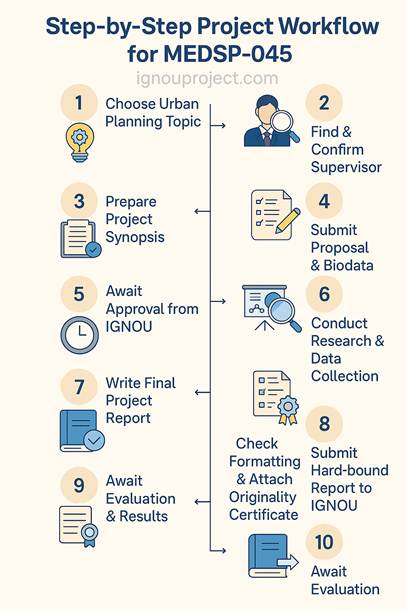
Figure 4: “Step-by-Step Project Workflow for MEDSP-045“
A well-executed project report not only earns your PGDUPDL diploma but also cultivates pragmatic skills in urban development. Do it step by step, seek guidance when needed, and you will harvest useful hands-on experience in urban planning and development. Good luck!
📧 Struggling with your IGNOU PGDUPDL Project for MEDSP 045? 💬 Not sure of project approval or project design? Receive 1-on-1 guidance from our veteran IGNOU tutors.