The Master of Science in Counselling and Family Therapy (MSCCFT) offered by the Indira Gandhi National Open University (IGNOU) is a specialised postgraduate programme designed to build professional competence in therapeutic counselling and family intervention. Among its academic requirements, the IGNOU MSCCFT Dissertation for MCFTP 2 serves as a capstone research project. This component assesses a learner’s ability to integrate theoretical knowledge with field-based inquiry, reflect on counselling practices, and apply research methodologies with clarity and precision.
The MCFTP 2 dissertation is not only an academic exercise but also a demonstration of applied skills in counselling and family therapy. It requires structured planning, ethical research conduct, and systematic writing. This guide explains the expectations of the MSCCFT (MCFTP 2) dissertation, the structure to follow, the research process, formatting standards, and evaluation criteria prescribed by IGNOU. It offers clear, accessible explanations to help learners complete this requirement successfully.
Understanding MCFTP 2 in the MSCCFT Programme
MCFTP 2 is a compulsory research component in the second year of the MSCCFT programme. Through this dissertation, learners are expected to:
- Engage in systematic inquiry related to counselling or family therapy
- Develop an understanding of research design and analysis
- Apply counselling theories to real-life contexts
- Enhance their ability to interpret findings critically
- Demonstrate ethical practice in data collection and field engagement
IGNOU positions this research project as a practical demonstration of academic competence in counselling and family therapy. It helps students strengthen their practitioner identity while advancing academic research skills.
Purpose of the IGNOU MSCCFT Dissertation (MCFTP 2)
The MSCCFT dissertation serves several academic and professional objectives, such as:
- Developing Research Competence
Students learn to formulate research problems, develop research tools, collect data, analyse results, and draw meaningful interpretations. - Applying Therapeutic Knowledge
The dissertation encourages learners to link counselling and therapeutic frameworks with real-world issues. - Encouraging Critical Inquiry
Through this MSCCFT project, students develop the ability to question, evaluate, and analyse complex psychosocial dynamics. - Promoting Evidence-Based Practice
It trains learners to support therapeutic decisions with empirical findings. - Building Professional Identity
Students enhance their academic profile, increasing opportunities in counselling, family therapy, research, and training roles.
Choosing a Research Topic for MCFTP 2 Project
Selecting a suitable MSCCFT dissertation topic is a crucial step. A good topic should be focused, relevant, researchable, and aligned with counselling or family therapy.
Key considerations when choosing a topic
- It must relate directly to counselling, mental health, family functioning, therapy interventions, or behavioural science.
- The scope should be manageable within the timeframe and resources.
- Ethical considerations must be addressed, especially when dealing with minors or vulnerable populations.
- The topic should allow measurable data collection and academic analysis.
- It should reflect real issues encountered in counselling settings.
Examples of appropriate MSCCFT dissertation topics
- Effectiveness of cognitive-behavioural strategies in reducing adolescent stress
- Role of family therapy in improving parent-child communication
- Counselling interventions for marital conflict among young couples
- Impact of group-based counselling on social skills among school children
- Stress management counselling for working women
- Case studies of therapeutic progress in clients with anxiety symptoms
These topics are manageable and directly connected to therapeutic practice.
Trending 20 IGNOU MSCCFT Project Dissertation Topics
Effectiveness of Family Therapy in Managing Childhood/Adolescent Obesity
- Studying whether family-based counselling and therapy lead to healthier eating behaviours and weight outcomes among overweight children/adolescents. (Similar to a prior MCFTP-002 example.)
Impact of Counselling Interventions on Stress and Burnout Among School Teachers
- Investigate the prevalence of occupational stress and burnout in teachers and evaluate the benefits of counselling or therapy-based interventions. (Matches earlier topic-samples of “occupational stress among employees/teachers.”)
Role of Family Therapy in Improving Marital Relationships Among Young Couples
- Examine how marital or couple-focused therapy affects communication, conflict resolution, and marital satisfaction.
Effect of Counselling on Mental Health and Social Adjustment of HIV/AIDS Patients
- Explore how therapy and family support influence psychosocial wellbeing, stigma reduction, and social integration of people living with HIV/AIDS. (Derived from mental-health & social-connections research ideas.)
Psycho-social Impact of Substance Abuse on Family Dynamics: Role of Family Therapy
- Study how substance abuse affects family relationships and assess the effectiveness of counselling/family therapy in rehabilitation and family reintegration. (Relevant given MSCCFT’s substance abuse therapy elective.)
Comparative Study of Online Counselling vs Traditional Face-to-Face Counselling in Urban India
- Given the rise of teletherapy and e-counselling, examine outcomes, acceptability, and client satisfaction across these two modes. (Reflects trending research on online counselling effectiveness.)
Counselling Interventions for Adolescent Anxiety Related to Academic Pressure
- Investigate how targeted counselling or therapy can help reduce anxiety, improve coping skills, and support mental health among high-school or college students.
Role of Family Therapy in Managing Marital Conflict in Dual-Career Couples
- Explore challenges unique to couples where both partners work (e.g., work–life balance, parenting stress), and evaluate therapy interventions to support marital and family wellbeing.
Impact of Parental Separation or Divorce on Children’s Emotional Wellbeing and Family Counselling Outcomes
- Study children’s emotional/behavioral adjustment after parental separation and assess how family counselling ameliorates negative effects. (Aligned with global counselling research interests.)
Efficacy of Mindfulness or Relaxation-Based Counselling in Reducing Workplace Stress
- Examine how mindfulness, relaxation therapy, or stress-management counselling impacts employees’ mental health, job satisfaction, and general wellbeing. (Reflecting broader counselling/therapy research trends.)
Effect of Counselling on Body Image Satisfaction Among Young Adults in Urban India
- Investigate how therapy or counselling can address body-image issues, self-esteem, and related mental health concerns in youth, possibly linked with social media influence. (Themes common in modern psychology research.)
Therapeutic Impact of Group Counselling in Improving Social Skills Among Adolescents from Slum/Underprivileged Communities
- Study how group therapy interventions affect self-esteem, social interaction, academic performance, and overall mental health in adolescents from economically weaker backgrounds. (Resonates with social-context focused research).
Counselling Interventions for Stress and Adjustment Among Migrant Workers’ Families
- Examine the psychosocial challenges faced by families of internal migrant workers (e.g., separation, loneliness, economic stress), and assess the role of family therapy.
Effect of Family Therapy on Elderly Depression and Loneliness in Joint vs Nuclear Families
- Study how family structure influences elderly mental health, and whether family-based therapy improves wellbeing, sense of belonging, and mental health outcomes.
Role of Counselling in Substance Abuse Prevention Among Adolescents
- Explore preventive counselling, education, and family-therapy-based interventions to reduce risk behaviors and substance use among adolescents.
Impact of Counselling on Caregiver Stress and Family Functioning of Patients with Chronic Illness (e.g., Cancer, Diabetes)
- Focus on caregiver burden, emotional stress, family relationships, and evaluate therapy-based interventions to support caregiver mental health.
Effectiveness of Child and Adolescent Counselling in Improving School Adjustment for Students with Behaviour Problems
- Research how counselling and family support can assist students exhibiting behavioural issues, improve school performance, social functioning, and emotional health. (Relevant due to MSCCFT’s child/adolescent therapy courses.)
Role of Family Counselling in Addressing Domestic Violence and Its Psychological Impact on Women and Children
- Study how therapeutic interventions influence mental health, self-esteem, coping strategies, and family functioning in settings of domestic abuse.
Cultural and Social Factors Affecting Counselling Acceptance: A Study Among Indian Communities
- Investigate attitudes, beliefs, stigma, and barriers to seeking counselling or therapy within different cultural, regional or socioeconomic groups. (Important for ground-level therapy practice.)
Impact of COVID-19 Pandemic on Family Relationships and Mental Health: Counselling Needs and Interventions
- Analyze how pandemic stress, lockdowns, job loss, or health anxiety affected family dynamics and mental health — assess effectiveness of remote counselling or family therapy post-pandemic. (Timely and socially relevant.)
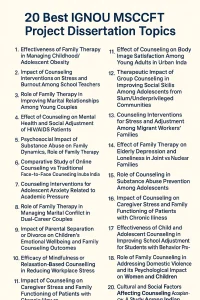
Image: 20 Best IGNOU MSCCFT Project Dissertation Topics
Writing the MSCCFT Dissertation Proposal for MCFTP 2
Before beginning the research study, learners must prepare a research proposal and get approval from their supervisor. The proposal outlines the planned study and ensures academic clarity.
Essential elements of the MSCCFT proposal
- Title of the Study
Should be clear, concise, and reflective of the research focus. - Introduction and Rationale
Explains the importance of the selected issue and its relevance to counselling or family therapy. - Statement of the Problem
Describes what the research aims to address. - Objectives
Usually 3–5 objectives that guide the study. - Research Questions or Hypotheses
Questions lead qualitative studies, while hypotheses guide quantitative studies. - Methodology
Includes research design, sample, tools, data collection methods, and analysis plan. - Ethical Considerations
Informed consent, confidentiality, and participant welfare must be ensured. - References
Should include credible academic sources.
A well-structured proposal provides direction and avoids confusion during the research process.
Structure of the IGNOU MSCCFT Dissertation
IGNOU follows a standard dissertation structure. Learners must adhere to this structure to maintain academic clarity.
1. Title Page
Contains:
- Title of dissertation
- Student’s name, enrolment number, and study centre
- Programme Name (MSCCFT)
- Course code (MCFTP 2)
- Supervisor’s details
- Submission year
2. Certificate
A signed certificate from the supervisor confirming authenticity of the research work.
3. Acknowledgements
Optional expression of gratitude.
4. Table of Contents
5. Introduction
Covers:
- Background of the topic
- Theoretical context
- Significance
- Scope of study
6. Review of Literature
This section summarises existing theories, past studies, and conceptual frameworks related to the topic. It helps build academic grounding.
7. Objectives and Research Questions
Clear and measurable objectives guide the entire study.
8. Methodology
Describes how the study was conducted:
- Research design
- Sample size and sampling techniques
- Research setting
- Tools and instruments
- Procedure of data collection
- Data analysis techniques
9. Results and Analysis
Presents the data findings through tables, charts, or descriptive explanations.
10. Discussion
Interprets the results, connects them with existing literature, and explains implications for counselling or family therapy.
11. Conclusion
Summarises the findings and links them with objectives.
12. Limitations
Acknowledges constraints affecting the study.
13. Suggestions for Future Research
Provides recommendations for further inquiry.
14. References
Should follow standard academic formatting.
15. Appendices
Include questionnaires, consent forms, or raw data.
Research Methodology in MCFTP 2 Project
Methodology is the core of the MSCCFT dissertation. It ensures systematic and transparent research practices.
Research Designs Commonly Used
- Descriptive Studies
Often used to understand behaviours, attitudes, or experiences. - Experimental or Quasi-Experimental Designs
Suitable for measuring the effect of counselling interventions. - Case Studies
Helpful when exploring detailed therapeutic processes. - Comparative Studies
Compare different groups, interventions, or outcomes. - Qualitative Designs
Ideal for studying emotions, perceptions, and therapeutic experiences.
Sampling Techniques
- Purposive
- Simple random
- Convenience
- Snowballing (in sensitive topics)
Data Collection Tools
- Questionnaires
- Rating scales
- Interviews
- Observation schedules
- Case notes
- Psychological tests (must be standardized and authorised)
Ethical Requirements
- No psychological harm
- Full confidentiality
- Parental consent for minors
- Secure handling of data
- Transparent communication with participants
Ethics are central to counselling research and must be followed without exception.
Primary Data Collection in IGNOU MSCCFT Project Dissertation
Primary data collection is a method that allows researchers to collect data that is specific to their research question and objectives. It includes:
- Quantitative methods: Counting, measuring, and questionnaires
- Qualitative methods: Interviews, focus groups, and observation
Primary data collection has several advantages over secondary data collection:
- More accurate and reliable results: Primary data collection is closer to the source.
- More relevant for the study: Researchers can tailor primary data to address specific research questions or objectives.
However, primary data collection can also be time-consuming and laborious.
When collecting primary data, research teams must ensure that they protect the rights of all human subjects in a study. This includes the right to privacy, IRB approvals, informed consent, and data security.
Formatting Guidelines for IGNOU MSCCFT Dissertation
Though IGNOU project guidelines may be updated periodically, standard formatting includes the following:
- Font: Times New Roman
- Size: 12 pt for main text, 14 pt for headings
- Spacing: 1.5 line spacing in chapters
- Margins: 1 inch on all sides
- Page Numbering: Bottom-centred
- Binding: Hard-bound or spiral (as specified by regional centre)
- Length: Typically 70–120 pages
All figures and tables must be properly numbered and referenced.
General Guidelines for the IGNOU MSCCFT Dissertation (MCFTP 2)
You can find detailed guidelines for a dissertation in several online university documents, such as graduate college handbooks and thesis checklists. You can also consult with your department, as they likely have guidelines related to how your dissertation should be structured.
Here are some general guidelines for writing the IGNOU MSCCFT Project Dissertation:
- Break down your MCFTP 2 dissertation into stages: Start with your literature review, then think about your methodology, and identify primary and secondary sources.
- Write as you go: Organize and analyze your material, and write up your dissertation.
- Choose a topic that you find interesting: Select something different, and don’t be too vague or narrow.
- Research: Research the topic.
- Follow a style manual: Chapter titles and subheadings should follow your style manual.
- Include tables or other illustrative materials: Include these when they are essential to the text.
- Follow formatting guidelines: The text should appear in a single column on each page, and be double-spaced throughout the document. There must be a consistent tab indentation throughout the entire document to indicate new paragraphs. The text should be left-justified, not centered or right-justified.
The main components of a dissertation structure are a title, an introduction, headings, a conclusion, and a bibliography.
Tips & Resources for writing an IGNOU MSCCFT Dissertation
Here are some resources that can help you writing the IGNOU MSCCFT Project Dissertation:
- Books and e-books: These can provide you with background information on your topic, as well as help you to develop your argument and methodology.
- Journals: These can provide you with the latest research on your topic, as well as help you to keep up with the current debates in your field.
- Other dissertations: These can give you an idea of what a dissertation should look like, and help you to identify potential sources.
- Professional publications: These can provide you with insights from practitioners in your field.
- Government documents, records, and statistics: These can provide you with data and evidence to support your argument.
- Interview transcripts: These can provide you with firsthand accounts of people’s experiences, which you can use to support your argument.
- Manuscripts: These can provide you with historical information on your topic.
In addition to these resources, you can also get help from your advisor, other faculty members, and librarians. They can provide you with guidance on your research, writing, and formatting.
Here are some additional tips for writing a MCFTP 2 dissertation:
- Start early. The sooner you start working on your dissertation, the more time you will have to research, write, and revise.
- Choose a topic that you are interested in and that you know something about. This will make the research and writing process more enjoyable and less daunting.
- Develop a clear and concise research question. This will help you to focus your research and writing.
- Create an outline of your dissertation. This will help you to organize your thoughts and ideas.
- Write regularly. Even if you can only write for a few hours each week, it is important to keep writing. This will help you to make progress on your dissertation and avoid getting overwhelmed.
- Get feedback from others. Ask your advisor, other faculty members, and friends to read your dissertation and give you feedback. This will help you to improve your writing and identify any areas that need further work.
Writing a dissertation is a challenging task, but it is also a rewarding one. By following these tips, you can increase your chances of success.
Submission Guidelines for MSCCFT (MCFTP 2) Dissertation
Learners should follow the official submission instructions issued by IGNOU.
Steps in Submission
- Complete the MSCCFT dissertation under supervision.
- Ensure the supervisor signs the certificate.
- Bind the MSCCFT project dissertation in the approved format.
- Submit one hard copy to the study centre or regional centre.
- Submit a soft copy if required by IGNOU’s online portal.
- Retain a personal copy for future reference.
Late submission may delay exam results and programme completion.
Evaluation of MCFTP 2 Project Dissertation
The MSCCFT dissertation is evaluated on specific academic criteria.
Key Evaluation Parameters
- Clarity and relevance of topic
- Literature review depth
- Structure and organisation
- Methodological precision
- Data accuracy and analysis
- Interpretation quality
- Ethical conduct
- Academic writing style
- Originality and absence of plagiarism
Supervisors and external examiners both contribute to final assessment. High-quality dissertations demonstrate critical thinking and practical insight.
Dissertation requirement in the MSCCFT program at IGNOU
The dissertation requirement for the Master of Science (Counselling and Family Therapy) (MSCCFT) program at IGNOU is a 100–150 page typewritten report in English. The report should include certifications, appendices, and enclosures. The report should be based on a research topic related to counseling and family therapy. You can use online material for review of literature, secondary data, and sources for your dissertation.
MSCCFT dissertation includes an analytical report on an individual counseling session, including:
- Exact URL of the session
- Type of counseling method used
- Details of the case
- Emotional environment of the session
- Your critical analysis of the session
- Recommendations, conclusions, and reflections
Your dissertation will have a 40% weightage from your academic counselor/supervisor, 40% from the external evaluator, and 20% from viva-voce marks. The viva can be organized online or offline by the Regional Centre, following safety guidelines prescribed by the Government.
You can consult your counselor or research guide to develop a solid research proposal, which should be between 6–10 pages long.
Frequently Asked Questions (FAQs) in IGNOU MSCCFT Dissertation Project (MCFTP 2)
What is MCFTP 2 in the IGNOU MSCCFT programme?
MCFTP 2 is the dissertation component that requires students to conduct independent research on counselling or family therapy themes.
How long should the MSCCFT dissertation be?
Most dissertations range from 70 to 120 pages, depending on the topic and depth of analysis.
Is a dissertation proposal mandatory in MCFTP 2?
Yes, a proposal approved by the supervisor is required before starting the research.
Can students choose any topic for MCFTP 2?
The topic must relate to counselling, mental health, or family therapy and be approved by the supervisor.
Are standardised psychological tools required in MSCCFT Dissertation?
They are recommended when measuring behavioural or emotional variables.
Additional Downloadable Resources
- IGNOU MSCCFT Proposal Sample PDF
- IGNOU MCFTP 2 Dissertation Format PDF
- IGNOU MSCCFT Project Topics List
Conclusion
The IGNOU MSCCFT Dissertation for MCFTP 2 is a significant academic milestone that develops strong research and analytical skills. It strengthens professional competence in counselling and family therapy by enabling learners to apply theoretical knowledge in a structured research framework. Completing this dissertation with clarity, ethical practice, and methodological care enhances both academic value and career readiness. With proper planning, topic selection, and consistent guidance from supervisors, learners can produce high-quality dissertations that meet IGNOU’s standards and contribute meaningfully to therapeutic practice.
For customised dissertation guidance, topic selection support, or help structuring your MCFTP 2 research chapters, expert academic assistance is available. Ensure your dissertation meets IGNOU standards and is written with clarity, originality, and academic precision. Reach out today to begin your structured and confident dissertation journey.