The IGNOU PGDWAM Project for MEVP 054 is a mandatory research-based component of the program PG Diploma in Waste Management from IGNOU. MEVP 054 focuses on planning, studying, and reporting a waste-related problem in a structured way. It allows students to apply theoretical knowledge to practical environmental challenges related to waste management. The project aims to develop research, analytical, and problem-solving skills by conducting an in-depth study on an issue concerning air pollution, water conservation, wastewater treatment, climate change, industrial emissions, or other environmental topics.
A well-structured PGDWAM (MEVP-054) project can enhance understanding of environmental management practices and contribute to sustainable solutions for air and water conservation.
MEVP 054 Code Clarification: What the PGDWAM Project Demands
MEVP 054 is the PGDWAM project course linked to the waste management diploma. In simple terms, the code indicates a project-based paper where the student must:
- identify a waste management issue in a defined area or system
- plan a study using a suitable method
- collect and analyse information
- propose practical recommendations
- present findings in a standard project report format
In addition, evaluators usually look for clarity, relevance to waste management, realistic scope, clean presentation, and original work. So, the topic and synopsis must match the course scope and practical needs.
Key Guidelines to Follow Before Starting PGDWAM Project
Strong PGDWAM projects follow rules from the start. Therefore, follow these core guidelines:
1) Keep the project strictly within waste management
The project must centre on waste prevention, segregation, collection, treatment, recycling, disposal, planning, policy, behaviour change, or compliance. Avoid broad environmental topics that do not focus on waste.
2) Maintain originality and avoid copied content
Use original writing and original structure. Even when using common concepts, rewrite in simple language and add local data, field notes, and observation-based points.
3) Choose a practical and measurable problem
A good MEVP 054 topic should allow data collection within the available time and budget. So, avoid topics that need costly lab tests or long-term monitoring unless resources exist.
4) Use ethical and safe methods
If the study involves people, collect consent, avoid sensitive personal data, and keep identity details confidential. If field visits involve dumpsites or biomedical waste areas, follow safety rules.
5) Align the synopsis, tools, and report
The synopsis is a promise of what will be done. Therefore, the final report must follow the same objectives, area, sample plan, and tools as written in the synopsis.
IGNOU PGDWAM Project Topic Selection for MEVP 054
Topic selection decides the final score more than any other step. Therefore, evaluate topics using these filters:
- Relevance: direct link to waste management
- Access: easy access to study area and respondents
- Data: possible to collect data through survey, observation, records, or audits
- Scope: manageable size (not too wide)
- Outcome: clear recommendations can be given
High-Scoring Topic Ideas in MEVP 054 (Waste Management Focus)
Solid Waste (Municipal / Community)
- household segregation level study in a ward and improvement plan
- door-to-door collection gaps and route optimisation ideas
- waste composition study for a market area and treatment plan
- decentralised composting feasibility for a housing society
Plastic Waste
- plastic footprint study in shops and reduction plan
- effectiveness of plastic collection points and recycler linkages
- awareness study on single-use plastic and behaviour change plan
Organic Waste
- canteen wet waste audit and composting model
- temple or event waste management plan with segregation design
- home composting adoption barriers and solutions
Biomedical Waste (Safe, Non-sensitive Scope)
- segregation and storage practices in small clinics (process review)
- staff awareness and compliance checklist-based assessment
E-Waste
- e-waste awareness study in colleges and collection model
- household e-waste storage behaviour and safe disposal plan
Construction and Demolition Waste
- local mapping of C&D waste hotspots and reuse options
- contractor practices study and practical compliance plan
Institutional Waste
- waste audit of a school/college and improvement roadmap
- paper waste reduction plan in an office setting
Rural and Semi-Urban Waste
- village waste management model with community mapping
- assessment of community bins and user behaviour
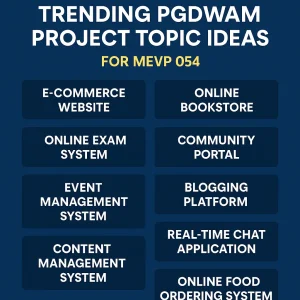
Image: Trending PGDWAM Project Topic Ideas for MEVP 054
PGDWAM Synopsis Writing for MEVP 054: Step-by-Step
A synopsis is a short plan of the project. It must be clear, specific, and structured. Also, it must match the final report.
Suggested Synopsis Structure (Use Simple Headings)
- Title of the Project
Keep it short and specific. Example: “Household Segregation Assessment and Improvement Plan in ____ Area”. - Background and Need
Explain the waste problem and why it matters locally. - Problem Statement
Write the exact issue in one or two lines. - Objectives (3 to 5 clear points)
Use action words such as assess, identify, analyse, evaluate, propose. - Study Area / Setting
Mention ward, village, campus, market, or facility. - Scope and Limitations
Define what the project covers and what it does not cover. - Methodology
- study design (survey/observation/audit/record review)
- sample size and sampling method
- tools (questionnaire, checklist, weighing method, interview schedule)
- Data Collection Plan
Mention primary and secondary data clearly. - Data Analysis Plan
Mention simple analysis: percentages, charts, comparison tables, basic trend patterns. - Expected Outcomes
State practical outputs such as action plan, awareness design, segregation model, composting plan, or routing plan. - Chapter Plan (Proposed Index)
Provide a brief chapter outline. - Work Plan / Timeline
A simple week-wise or month-wise plan.
Synopsis quality checklist
- the topic matches waste management scope
- objectives match tools and sample
- methodology is doable
- outcomes are practical and local
IGNOU PGDWAM Project Guide/Supervisor Selection
A guide plays a key role because the guide checks feasibility, approves the synopsis, and supports report quality. Therefore, select a guide early.
What to Look for in a Good Guide
- experience in waste management, environmental management, public health, or related work
- ability to review drafts and correct structure
- familiarity with surveys, audits, and basic data analysis
- willingness to provide timely feedback
Guide Eligibility (General Academic Expectation)
While exact rules can vary by centre, a suitable supervisor usually meets these conditions:
- has relevant postgraduate qualification or higher in a related field
- has teaching, research, or professional experience related to waste or environment
- can certify that the work is guided and original
- is not a close family member of the student
- is available for review and sign-off
To avoid rejection, ensure the guide’s details are complete and consistent across synopsis and final submission documents.
IGNOU PGDWAM Project Report Format (MEVP 054): Suggested Structure
A clean and standard report format improves readability and marks. Therefore, keep the structure consistent and simple.
Front Section (Preliminary Pages)
- Title Page (course code MEVP 054 and project title)
- Student Declaration (original work statement)
- Guide Certificate / Approval (as required)
- Acknowledgement
- Abstract (150–250 words, concise)
- Table of Contents
- List of Tables / Figures (if used)
Main Chapters (Core Content)
Chapter 1: Introduction
- background
- local context
- need of the study
- objectives
- scope and limitations
Chapter 2: Review of Related Concepts
- basic concepts relevant to the topic
- local rules, system description, or standard practices
- Keep it short and directly linked to the topic.
Chapter 3: Methodology
- study area
- sample and sampling
- tools used
- data collection steps
- analysis plan
Chapter 4: Results and Discussion
- present findings in tables/graphs
- explain what the numbers mean
- compare key patterns (example: before vs after, area-wise, respondent-wise)
Chapter 5: Recommendations and Action Plan
- short-term and long-term actions
- roles and responsibility (households, staff, local body, vendor)
- cost notes (basic, if possible)
- monitoring plan (simple indicators)
Conclusion
- link back to objectives
- summarise key outcomes
Annexure
- questionnaire / checklist
- raw observation sheet
- photos (if available and appropriate)
- consent format (if used)
Formatting Tips (Simple and Safe)
- use A4 pages
- keep headings clear
- keep tables labelled and numbered
- write in short paragraphs
- avoid very long sentences
- ensure spelling and grammar are clean
Data Collection and Topic Execution in MEVP 054
For MEVP 054, practical and low-cost methods usually work best:
- Waste audit: measure or estimate waste types and quantities in a defined area
- Household survey: segregation habits, storage practices, willingness to pay, awareness
- Observation checklist: bin use, litter points, collection timing, safety practices
- Record review: collection logs, purchase records, complaint registers (if available)
- Stakeholder interviews: sanitation workers, supervisors, shop owners, residents
In addition, use simple analysis such as percentage distribution, top problems list, and gap mapping. Clear findings matter more than complex statistics.
IGNOU PGDWAM Project Submission Process: Step-by-Step Checklist
Submission becomes smooth when documents are ready and consistent. Therefore, use this sequence:
- Finalise the topic and synopsis
- Get guide approval (signatures where required)
- Complete field work and data analysis
- Write the report in the standard chapter format
- Proofread and correct language (grammar, spacing, numbering)
- Attach required certificates and declarations
- Prepare the final print or file version as per the centre’s accepted mode
- Submit at the designated submission point as per current instructions
- Keep a copy of the synopsis, report, and receipts/acknowledgement
To avoid delays, ensure that the course code MEVP 054 is correctly written on the title page and forms.
Must Read: Check Your IGNOU Project Status: A Complete Guide
FAQs in IGNOU PGDWAM Project for MEVP 054
What is the IGNOU PGDWAM Project for MEVP 054?
It is a project-based course where a waste management problem is studied using field data and presented as a structured project report.
How should a topic be selected for MEVP 054?
Select a topic with clear waste focus, easy data access, limited scope, and practical outcomes such as an action plan or improvement model.
What should a MEVP 054 synopsis include?
Include title, need, problem statement, objectives, study area, methodology, sample plan, tools, analysis plan, expected outcomes, and timeline.
Can the project be based on a workplace or local area?
Yes, if access is available and the topic stays within waste management, such as audits, segregation, collection gaps, or treatment planning.
Downloadable PDFs
Final Words
The IGNOU PGDWAM Project for MEVP 054 becomes manageable when handled in a clear order: select a practical waste topic, write a focused synopsis, work with an eligible guide, collect real field data, and present findings in a standard report format. In addition, an action-based recommendation chapter improves academic value and shows real understanding of waste management systems.
For structured help with topic finalisation, synopsis drafting, and report formatting support for MEVP 054, visit ignouproject.com or contact us.