Hello, MSc Zoology scholars of IGNOU! As you approach the culmination of your program, the IGNOU MSCZOO Project & Dissertation for MZOP 001 becomes a crucial milestone. This comprehensive guide will walk you through everything you need to know about the IGNOU MSCZOO project – from understanding official guidelines to choosing a topic, writing the report, and acing the viva voce. Let’s dive in!
🔍 IGNOU MSCZOO Project (MZOP-001) – Quick Overview
- Course Code: MZOP-001
- Credits & Duration: 4-credit research project completed in Semester 4 (≈6 months / 120 hours).
- Synopsis: ❌ Not required for approval. Directly work on and submit the final project report.
- Supervisor & Topic: Choose an IGNOU-approved guide and a topic in Zoology or Life Sciences. Must be approved by your Regional Centre.
- Report Format: 5,000–6,000 words. Follow IGNOU Project Guidelines with chapters like Introduction, Methodology, Results, Conclusion, References. Plagiarism must be under 10%.
- Submission: Submit one bound hard copy + soft copy (PDF on CD) to the Student Evaluation Division.
- Deadlines: ~May 31 (July Session) | ~Nov 30 (January Session)
- Evaluation: 100 Marks → 80 for Report, 20 for Viva. Minimum 50% required to pass.
✅ Plan well, write originally, follow format, and ace your viva! 🎓
Now, let’s explore each of these points in detail, so you can crack your IGNOU MSCZOO project with confidence.
Introduction to IGNOU MSCZOO Project (MZOP 001)🧬
What is MZOP-001 in IGNOU MSCZOO Programme?
It’s the culminating research project for the Master of Science in Zoology (MSCZOO) at IGNOU. Worth 4 credits, this dissertation is undertaken in the final (4th) semester and is essentially a mini-research project that exposes you to real scientific inquiry. You’ll engage in designing a study, conducting experiments or fieldwork, and analyzing data on a zoological topic of your choice. The project is a fantastic opportunity to apply the theories and skills you’ve learned throughout your coursework to a practical research problem in zoology.
Importance of MZOP-001 Project in MSc Zoology
Beyond being a degree requirement, the MZOP-001 project helps develop your research skills, scientific thinking, and analytical abilities. You’ll learn how to review literature, identify a research question, formulate methodology, collect and interpret data, and present your findings in a well-structured report. This process prepares you for future endeavors in research or academia, and it’s something you can showcase in your CV or interviews as a significant academic achievement.
🎯 Program Context – Purpose of the IGNOU MSc Zoology Project
The IGNOU MSc Zoology Project (MZOP-001) bridges academic theory with real-world research. As per IGNOU Project Guidelines, it should ideally involve collaboration with institutions or labs and focus on topics aligned with the Zoology curriculum. Projects must contribute to understanding areas like animal biology, ecology, conservation, genetics, or applied zoology, giving students a chance to explore a meaningful zoological issue in depth.
⏳ When to Start & What to Expect in MSCZOO Project Dissertation
- Start Early: IGNOU allows you to begin your MZOP-001 project in the 3rd semester. Planning early—finalizing your topic and supervisor—gives you ample time (~6 months) to conduct research and write your report without last-minute stress.
- Alongside Coursework: The project runs parallel to your final semester, so time management is key.
- Hands-On Research: MZOP-001 emphasizes practical learning. You may engage in fieldwork, lab experiments, surveys, or observational studies depending on your topic.
- Institutional Collaboration: IGNOU encourages students to collaborate with wildlife agencies, research labs, NGOs, or universities for richer insights and data collection.
✅ Early planning + real-world application = a stronger, impactful dissertation.
IGNOU MSCZOO Project Guidelines & Requirements 📘
📘 IGNOU MZOP-001 Project Rules & Must-Know Guidelines
- ❌ No Synopsis Submission: For MSc Zoology (MZOP-001), you don’t need to submit a synopsis for approval. You can begin the project directly once your topic and supervisor are finalized. Still, prepare a basic synopsis for planning. (See: How to write IGNOU Synopsis/Proposal?)
- 📗 Official Handbook: Refer to the IGNOU MZOP-001 Handbook for complete instructions on topics, formatting, submission, and evaluation. It is the most authoritative source.
- 🎯 Topic Relevance: Choose a topic related to Zoology or allied Life Sciences—e.g., ecology, genetics, physiology, wildlife, entomology. Interdisciplinary topics are allowed if clearly linked to zoology.
- ✅ Originality & Plagiarism: Plagiarism must be under 10%. Do not copy from books/web or use AI tools to generate content. Use your own words, cite properly, and avoid “solved projects.”
- 👨🏫 Supervisor Approval: Select an eligible supervisor early (approved by IGNOU/Regional Centre). You must submit their bio-data for official approval before starting your project.
👨🏫 Selecting Your IGNOU MSCZOO Project Supervisor – Key Guidelines
- Who Can Be a Supervisor?
A qualified guide must have a PG or PhD in Life Sciences (or related field) with minimum 2 years of teaching/research experience. IGNOU Academic Counsellors, faculty from universities, or scientists from research institutes are eligible—subject to IGNOU’s approval. - Approval Process:
Submit your supervisor’s bio-data (CV) and consent letter to the Regional/Study Centre for approval. This should be done in Semester 3 or early in Semester 4. ❗Working with an unapproved supervisor can invalidate your project. - Supervisor’s Role:
Your supervisor guides you in:- Finalizing your topic 🎯
- Designing methodology
- Reviewing progress and drafts
- Issuing the Supervisor Certificate for your report
- Preparing you for the viva voce
- If You Can’t Find a Guide:
Contact your Programme Coordinator or Regional Centre—they may assign or suggest a qualified supervisor.
✅ Tip: Choose someone approachable, experienced, and aligned with your project topic.
🗓️ IGNOU MZOP-001 Project Timeline & Completion Guide
- 🕒 Duration: The MZOP-001 project is a 4-credit task to be completed in 6 months (≈120 hours) during the 4th semester (~5 hours/week).
- 🚀 Start Early: Begin in the 3rd semester—finalize topic and supervisor by August to avoid last-minute stress. IGNOU recommends starting by Semester 3 for smooth progress.
- 📆 Suggested Milestone Plan:
- Month 1: Topic & supervisor finalization + literature review
- Month 2: Design methodology, prep tools
- Months 3–4: Research/data collection
- Month 5: Analyze data, begin writing
- Month 6: Finalize report, supervisor approval, submission
- 📮 Submission Deadlines:
- July Cycle: Submit by 31 May → Viva in Jul–Aug
- January Cycle: Submit by 30 Nov → Viva in Jan–Feb
- Submission Windows:
- Jan 1–Mar 31 (for June TEE)
- Jul 1–Sep 30 (for December TEE)
✅ Submit early if possible. Check for updates via IGNOU notifications.
- ⚠️ Extensions: If delayed, you may need to re-register. Non-submission or failure means resubmission in the next cycle—this delays graduation, so plan proactively!
📗 Key Rules & Ethical Guidelines – IGNOU MSCZOO Project (MZOP-001)
- 🔬 Ethical Research: If your project involves animals, follow ethical practices and obtain permissions (e.g., from forest departments or labs). Mention approvals in your methodology.
- 📊 Data Integrity: Avoid data fabrication. Report results honestly—even inconclusive ones. Academic honesty is valued over perfection.
- 👤 Individual Work Only: Group submissions are not allowed. Projects must be uniquely yours, even if topics are similar among peers.
- 🚫 No Pre-Written Projects: Don’t use “solved projects” or plagiarized content. Use past samples only for structure or inspiration—not copying.
- 🖋️ Formatting Standards: Use clear fonts (e.g., Times New Roman 12), 1.5 line spacing, proper headings, margins, and page numbers as per IGNOU Project Format.
- 🗣️ Language & Tone: Write in academic English, use active voice, and keep the tone clear and formal. Define technical terms and avoid slang.
- 📚 Referencing: Follow APA or IGNOU-specified style. Use reliable sources (journals, books, reports). Cite all references in-text and in the reference list.
✅ Following these rules ensures your project is authentic, academically sound, and accepted without issues.
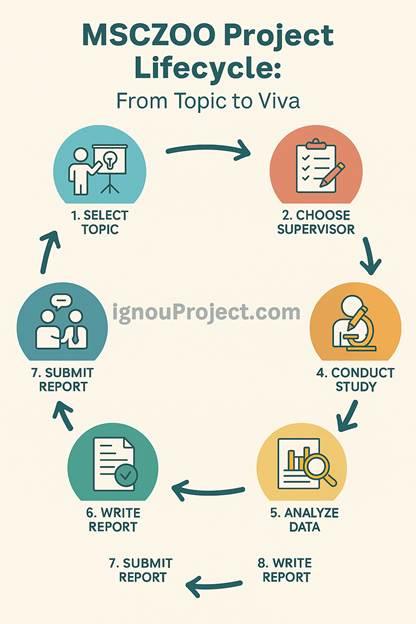
Figure 1: “MSCZOO Project Lifecycle: From Topic to Viva”.
Choosing Your IGNOU MSCZOO Project Topic 🎯
Choosing the right MZOP-001 project topic is crucial for success. Here’s how to make a smart, feasible, and approved choice:
- 🎯 Align with IGNOU Scope: Select a topic rooted in Zoology or Life Sciences (e.g., Ecology, Genetics, Physiology, Wildlife, Entomology). Refer to the IGNOU MZOP-001 Handbook for illustrative topics.
- ❤️ Follow Your Interest: Pick a subject you’re genuinely passionate about. Leverage your background or local access (e.g., labs, wildlife reserves, research institutes) to enhance feasibility.
- 📏 Be Realistic: Ensure your topic is doable within 4–6 months and with the resources you have. Choose small-scale, focused studies over large, complex ones.
- 📂 Maintain Originality: Projects must be original—you may replicate known studies in new contexts, but avoid copying solved projects. Use past reports only for reference or structure.
- ✅ Topic Confirmation: No synopsis approval needed, but inform your Regional Centre when submitting your supervisor’s details. Ensure the topic is relevant and acceptable under IGNOU’s Zoology curriculum.
Here are some sample project topic ideas for IGNOU MSc Zoology (MZOP-001) to spark your inspiration (you are not limited to these – think of them as examples of scope and style):
🧪 Top IGNOU MSCZOO Project Topics (MZOP-001) – Sample Ideas 🎓
Here are 10 feasible and IGNOU-aligned dissertation ideas for MSc Zoology students:
- 🐒 Urban Wildlife Behavior
Study how Rhesus macaques adapt their foraging/social behavior in city parks. - 🦜 Habitat Fragmentation & Birds
Compare bird diversity in continuous forests vs. fragmented woodlots. - 🐟 Climate Change on Aquatic Life
Examine how rising water temps affect fish breeding or metabolism. - 🦠 Parasitology in Domestic vs. Wild Animals
Compare parasite loads in street dogs vs. wild canines or seasonal trends in livestock. - 🧬 Conservation Genetics
Analyze genetic diversity of an endangered species using DNA methods (if lab access is available). - 🐝 Pollinator Surveys in Local Ecosystems
Observe insect pollinators and their role in fruit set or flowering success. - 🦁 Human–Wildlife Conflict & Conservation
Assess the effectiveness of awareness programs or wildlife corridors. - 🔬 Comparative Anatomy Study
Analyze digestive tract differences between herbivores and carnivores using specimens. - 🏭 Pollution & Wildlife Health
Measure pollutant impact (e.g., heavy metals) on fish health across two water bodies. - 🐸 Reproductive Behavior in Amphibians
Study frog mating calls and nesting success in a local pond during breeding season.
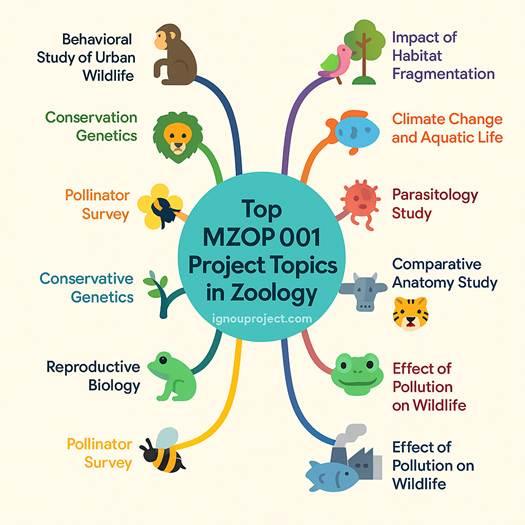
Figure 2: “Top MZOP 001 Project Topics in Zoology”
📝 Tips:
- Refine broad topics with your supervisor for clarity and scope.
- Focus on doable, resource-accessible studies (~4–6 months).
- Use these ideas as starting points—modify based on your interest and setting.
✅ With the right topic, your MZOP-001 project can be both impactful and enjoyable!
✍️ Writing the MSCZOO Synopsis (Project Proposal)
Although IGNOU does not mandate a formal synopsis submission for MZOP-001, preparing a brief project proposal is highly recommended for planning, supervisor guidance, and topic clarity.
🗂️ Format and Structure
A well-organized synopsis should include:
- Title: Clear, concise, and topic-specific
- Introduction & Background: Brief context and relevance of the study
- Objectives: 2–3 focused aims of the project
- Research Questions/Hypothesis (if applicable)
- Methodology: Study area, data collection methods, analysis tools
- Expected Outcomes: Anticipated insights or results
- Timeline: Tentative monthly plan
- References: 4–5 key sources cited properly
📌 Tip: Keep it within 4–6 pages, typed in Times New Roman 12 pt, 1.5 line spacing.
📥 Sample Synopsis Download
Looking for a ready reference?
✅ Download MSCZOO Synopsis Sample PDF
🛑 Note: Use samples only as reference—do not copy content.
🕒 Approval Process and Timeline
- Formal approval is not required for MZOP-001.
- However, share your synopsis with your supervisor early in Semester 3 for feedback.
- Include the tentative topic while submitting your Supervisor Bio-data to the Regional Centre for guide approval.
- Make adjustments as advised and finalize your research plan before Semester 4 begins.
✅ Starting early ensures smoother execution and better supervision throughout your project work.
📘 Writing the MSCZOO Project Report – IGNOU MZOP-001
The project report is the core of your MZOP-001 submission. It should reflect original research, follow IGNOU guidelines, and be structured clearly. Here’s how to write it right 👇
🧾 Chapter-Wise Breakdown (Intro, Methodology, Data Analysis, etc.)
Follow this standard chapter sequence:
- Title Page – Project title, your details, IGNOU info, supervisor’s name
- Certificate & Declaration – Signed by you and your supervisor
- Acknowledgements (optional) – Brief gratitude note
- Table of Contents – Auto-generated with proper page numbers
- Abstract (200–300 words) – Brief summary of objectives, methods, findings
- Chapter 1: Introduction – Topic background, rationale, objectives
- Chapter 2: Literature Review – Summary of related past research
- Chapter 3: Methodology – Study area, data tools, techniques, procedures
- Chapter 4: Results – Tables, graphs, key observations
- Chapter 5: Discussion – Interpretation of findings, link to objectives
- Chapter 6: Conclusion & Recommendations
- References – APA style preferred; cite all sources used
- Annexures – Survey tools, maps, raw data, permissions, etc.
📌 Ideal Length: 5,000–6,000 words (~50–60 pages)
✍️ Tips for Writing Abstract, Bibliography & Annexures
- Abstract: Write this last after report completion. Include aim, methods, key result, and conclusion. Keep it concise and factual.
- Bibliography/References: Use consistent citation style (APA or as instructed). Include only sources actually cited in your report.
- Annexures: Add raw data, photos, maps, questionnaires, or permissions. Label clearly as Annexure 1, 2… and refer to them in your chapters where relevant.
🧠 Tip: Use tables/graphs for clarity. Number all figures and reference them properly in the text.
⚠️ Common Mistakes to Avoid in MSCZOO Dissertation
🚫 Don’t let these errors cost you marks:
- Plagiarism above 10% – IGNOU will reject your project
- Using AI tools to auto-generate content – flagged by evaluators
- Missing chapters or sections (like Literature Review or Discussion)
- Poor formatting – inconsistent fonts, missing page numbers
- Submitting without supervisor’s certificate
- Grammatical errors or unclear language – use Grammarly or peer review
- Skipping proper citations – leads to academic misconduct
- Ignoring IGNOU’s formatting rules – always follow the official IGNOU Project Format
✅ Review, proofread, and get supervisor feedback before final submission.
🔬 MSCZOO (MZOP 001) Dissertation Writing: A Deeper Dive
The MZOP 001 dissertation at IGNOU is more than just a routine assignment—it reflects your ability to conduct scientific research independently. Here’s how to approach it with academic precision and research depth. 🎓
🆚 Key Differences Between Project and Dissertation in MZOP 001
Understanding the distinction helps set expectations right:
Table 1: Differences Between Project and Dissertation in MZOP 001
| Aspect | Project | Dissertation |
| Focus | Application-based study (e.g., field survey) | In-depth academic research |
| Scope | Modest & feasible in 6 months | Slightly broader & more analytical |
| Objective | Solve a real-world problem | Explore and interpret scientific questions |
| Structure | Follows IGNOU’s basic report format | Requires deeper literature review & critical analysis |
| Data Use | Primarily observational or primary | May include advanced tools or statistical testing |
📌 Note: For MZOP 001, the terms are often used interchangeably by IGNOU, but your approach should match the academic depth of a dissertation.
🧠 Advanced Research Techniques for MSCZOO Dissertation
Elevate your dissertation with higher-level methods, depending on your topic and resources:
- Field-Based Techniques:
- Line-transect sampling for biodiversity studies
- Quadrat and plot methods for ecological surveys
- Behavioural observation and ethograms (in ethology)
- Lab-Based Techniques:
- Microscopic analysis (e.g., tissue, parasites, slides)
- Basic molecular tools (e.g., agarose gel electrophoresis, DNA barcoding)
- Spectrophotometry for physiological studies
- Data Collection Tools:
- Questionnaire design (for human–wildlife conflict studies)
- Remote sensing basics (Google Earth imagery for habitat mapping)
- Camera trap data (if collaboration with a forest department/NGO is possible)
- Software Tools:
- MS Excel for data tabulation & charting
- SPSS or R for statistical testing (t-tests, ANOVA, correlation)
- QGIS or Google Earth for spatial mapping
💡 Tip: Choose techniques that align with your topic and available resources. Always justify your method in the Methodology chapter.
📊 Data Analysis and Interpretation for MZOP 001
Your MSCZOO dissertation should not just report data—it must analyze and interpret it meaningfully.
- Quantitative Analysis:
- Use mean, range, standard deviation for numerical data
- Use species diversity indices (e.g., Shannon, Simpson) in ecological work
- Apply correlation or regression to show trends
- Represent findings with bar graphs, pie charts, line graphs, or histograms
- Qualitative Analysis:
- Categorize behavioral patterns, habitat features, etc.
- Use thematic analysis if working with survey responses or open-ended data
- Support observations with field photos and annotated figures
- Interpretation Tips:
- Compare findings with existing studies (from Literature Review)
- Explain anomalies logically
- Don’t overstate conclusions—keep them evidence-based
- Include implications and possible applications of your findings
✅ A clear “Results & Discussion” section strengthens your dissertation’s academic value.
📤 IGNOU MSCZOO Project Submission Process – MZOP 001
After completing your dissertation, you must submit your project report to IGNOU for evaluation. Here’s how to submit it correctly, whether online or offline, and meet the deadlines on time ✅
🌐 Online Submission Step-by-Step
IGNOU has enabled online project submission for most programs, including MSCZOO. Follow these steps:
- Prepare your final report in PDF format (with signed certificate pages).
- Visit: https://projects.ignou.ac.in/projectupload/
- Login using your enrollment number, program code (MSCZOO), and email ID.
- Fill the project submission form with details like topic, supervisor name, regional centre, etc.
- Upload the PDF file of your project report.
- Submit and download the Acknowledgement/Receipt PDF for your records.
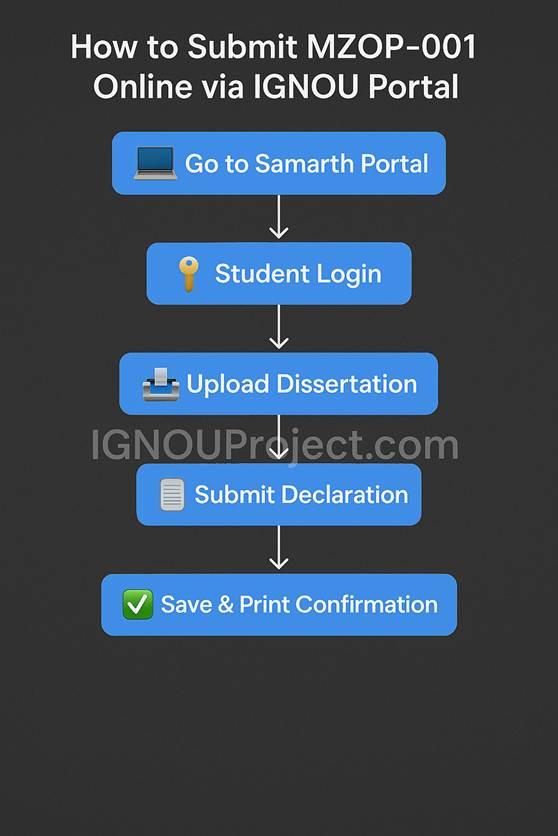
Figure 3: “How to Submit MZOP 001 Online via IGNOU Portal”
📎 Tip: File size must not exceed IGNOU’s upload limit (~10 MB). Compress PDF if needed.
📬 Offline Mode and Regional Centre List
If your regional centre still requires offline submission, follow this:
- Submit a spiral/bound hard copy of your report
- Include:
- Signed Supervisor Certificate
- Student Declaration of originality
- Project Submission Form (available at IGNOU or your RC’s website)
- A soft copy (PDF) of the report on CD/DVD or USB (labeled properly)
📦 Send or deliver the project to your Regional Centre or Student Evaluation Division (SED), IGNOU HQ depending on instructions.
🗓️ Last Dates for Jan & July Cycles
Submit your MZOP-001 project by these IGNOU deadlines:
Table 2: Last Dates for Jan & July Cycles
| Admission Cycle | Submission Last Date | Viva Period | Result Cycle |
| July Session | 31st May | July–August | December TEE |
| January Session | 30th November | Jan–Feb | June TEE |
📌 Submission Windows:
- Jan 1 – Mar 31 (for June TEE)
- Jul 1 – Sep 30 (for December TEE)
🔄 Always check official IGNOU notifications for any changes or deadline extensions.
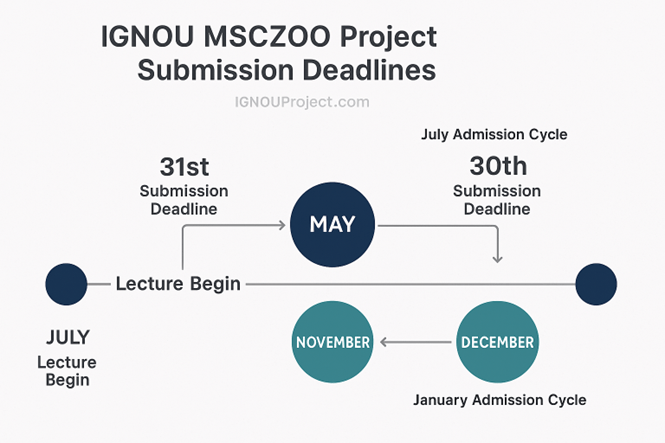
Figure 4: “IGNOU MSCZOO Project Submission Deadlines”
✅ Submitting early ensures timely viva scheduling and reduces last-minute stress.
Note: To learn more about submission process, read our article on “IGNOU Project Submission Guide”.
🎤 Viva Voce and Evaluation Criteria for MZOP 001 Project
Once your MSCZOO project is submitted, you’ll face a viva voce—an oral examination conducted at your IGNOU study centre. This is your chance to defend your research and demonstrate subject understanding.
❓ Common Viva Voce Questions for MZOP 001
Expect questions like:
- What inspired your topic selection?
- What are the main objectives of your study?
- Describe your research methodology.
- What challenges did you face during data collection?
- What are your key findings?
- How do your results align with existing studies?
- What limitations did you encounter?
- If you had more time, how would you expand the study?
🧠 Tip: Be ready to explain your project logically and confidently without reading from your report.
📚 Viva Preparation Tips
- Know your project inside out – reread all chapters, especially methodology and results.
- Practice explaining your project aloud in simple terms.
- Prepare a 1–2 minute project summary for introduction.
- Anticipate cross-questions and be honest if unsure.
- Bring a printed copy of your project to the viva.
- Dress neatly and reach your centre on time.
- Stay calm and confident – the viva is usually informal but important.
✅ Bonus Tip: Ask your supervisor to conduct a mock viva session for practice.
📊 How the MZOP-001 Project is Evaluated
Table 3: Evaluation Criteria for MSCZOO (MZOP-001) Project
| Evaluation Component | Weightage |
| Project Report | 80 Marks |
| Viva Voce (Oral Exam) | 20 Marks |
| Minimum to Pass | 50% (Overall) |
The evaluator checks:
- Relevance and clarity of research topic
- Scientific methodology and data accuracy
- Originality and formatting compliance
- Clarity in presentation during viva
- Response to questions and conceptual understanding
🚫 Red Flags: High plagiarism, copied content, unclear objectives, or poorly written reports may lead to rejection or resubmission.
⚠️ Common Mistakes to Avoid in MZOP 001 Project
Avoiding these frequent errors can help ensure your MSCZOO dissertation is accepted smoothly and evaluated positively. Here’s what to watch out for:
❌ Top Mistakes Students Make:
- 📋 Skipping the Project Guidelines: Not reading the official IGNOU MZOP-001 handbook leads to incorrect formatting, structure, or submission errors.
- 📄 Missing Supervisor Approval: Starting without a formally approved supervisor may result in disqualification, even if the project is well-written.
- 📝 Lack of Originality / High Plagiarism: Projects with >10% plagiarism or copied content from internet sources or solved PDFs get rejected. Always cite sources and write in your own words.
- 🔎 Poor Topic Selection: Choosing a topic that’s either too broad, irrelevant to zoology, or unfeasible to complete within time/resources.
- 📉 Weak Methodology or Data: Vague research methods, insufficient or fake data, and unclear objectives reduce your academic credibility.
- 📚 Improper Referencing: Using inconsistent or missing citation styles (APA preferred) can reduce report quality and academic value.
- 📦 Incomplete Submission: Forgetting to include required documents like the Supervisor Certificate, Declaration, or soft copy on CD/USB.
- 🧾 Formatting Errors: Ignoring guidelines for font, margins, spacing, page numbers, etc., affects readability and professionalism.
- 🚫 Late Submission: Missing the final submission deadline (31 May or 30 Nov) can delay your degree by 6+ months.
- 🧠 Poor Viva Preparation: Not revising your own report before viva or failing to answer basic questions about your research.
✅ Pro Tip: Review your report with your supervisor before submission and use a checklist to ensure nothing is missed.
📚 Resources and Support for Your IGNOU MSCZOO Project
To excel in your MZOP-001 project, it’s important to use trusted, credible, and officially supported resources. Here’s a curated list to help you at every stage—from topic selection to final submission ✅
🏛️ Official IGNOU Resources (eGyanKosh, Regional Centres)
- 🔗 eGyanKosh:
IGNOU’s official digital repository for course materials, past project reports, and handbooks. Use it to:- Download the MSCZOO project handbook
- Access past research references
- Review related zoology content from course units
- 📍 Regional Centres & Study Centres:
Your Regional Centre is your go-to for:- Supervisor approvals
- Project submission updates
- Viva scheduling and clarification on rules
👉 Use the IGNOU RC Directory to locate your centre.
📘 Recommended Books and Journals for MSCZOO
For quality research and literature review, refer to:
- Books:
- Principles of Animal Ecology – N. V. Belsare
- Textbook of Zoology (Volumes I & II) – Kotpal & Jordan
- Introduction to Parasitology – Chandler
- Wildlife Ecology and Conservation – A. Sutherland
- Journals:
- Current Science (INSA)
- Journal of Wildlife Research
- Indian Journal of Experimental Biology
- Journal of Threatened Taxa
- Zoological Survey of India (ZSI) Reports
🧠 Tip: Always cite peer-reviewed articles and avoid Wikipedia as a formal reference.
📥 Download MSCZOO (MZOP-001) Project Sample PDF
Need help structuring your project work?
👉 Download MSCZOO Project Sample PDF
🚫 Do not copy any content—use it for guidance only.
📂 Download Sample List of MSCZOO Project Topics (PDF)
Still deciding on your topic?
👉 Download MSCZOO Project Topics List PDF
❓ FAQs on IGNOU MSCZOO Project (MSc Zoology) for MZOP 001
Here are the most commonly asked questions by IGNOU MSc Zoology learners about the MZOP-001 project—answered clearly to save your time and reduce confusion 🔍
What is MZOP-001 in the IGNOU MSc Zoology programme?
MZOP-001 is the project/dissertation component of IGNOU’s MSc Zoology (MSCZOO) course. It carries 4 credits and is completed in the 4th semester, involving independent research under a supervisor.
Do I need to submit a synopsis for MZOP-001?
No. IGNOU does not require formal synopsis approval for MZOP-001. However, preparing a proposal for personal planning and supervisor feedback is highly recommended.
Who can be my MSCZOO project supervisor?
Your supervisor must:
- Have an M.Sc./PhD in Life Sciences/Zoology
- Have minimum 2 years of teaching or research experience
- Be approved by your IGNOU Regional Centre
Academic counsellors or college professors often serve as guides.
Can I submit the MZOP-001 project online?
Yes, IGNOU allows online submission via:
👉 https://projects.ignou.ac.in/projectupload/
You’ll need to upload your final PDF report and fill in submission details.
Where can I get the IGNOU MZOP-001 Handbook?
Check:
👉 http://egyankosh.ac.in/
🔚 Final Thoughts – Crack Your MSCZOO (MZOP-001) Project with Confidence! 🏆
Embarking on the IGNOU MSCZOO Project & Dissertation for MZOP 001 may seem overwhelming at first, but remember: every successful postgraduate has done it—and so can you. Your MZOP-001 dissertation is more than an academic task; it’s your chance to explore a real-world zoological question, develop research skills, and grow as a scientific thinker.
🎓 Believe in Yourself!
Your MSCZOO journey is a story of self-discipline, learning, and achievement. IGNOU’s flexible system has brought you this far—and this project is another step toward your degree and your goals.
So, put on your researcher’s cap and dive into your project with determination, curiosity, and confidence. You’re not just fulfilling a requirement—you’re contributing to science and preparing for the next big chapter in your life.
Best of luck, future zoologist!
Go ahead and make your mark in the world of animal science. You’ve got this! 🌍🐾🎉
🎯 Need Help with Your IGNOU MScZOO Project?
Download our sample PDFs, get a ready-to-edit project format, or book expert help for MZOP 001 today!
👉 [Get Expert Project Help Now]

BK Sahni iD 0009-0005-8092-459X
Founder, Shri Chakradhar Publication Pvt. Ltd. & ignouproject.com — helping IGNOU distance-learning students since 2010 (5,00,000+ students supported across MBA, MCom, MA & more). Author of IGNOU exam guides, solved assignments & project reference books.
Disclosure: Shri Chakradhar Publication Pvt. Ltd. and ignouproject.com are independent third-party study-help services — not the official IGNOU website. Always verify final dates and rules on ignou.ac.in.